
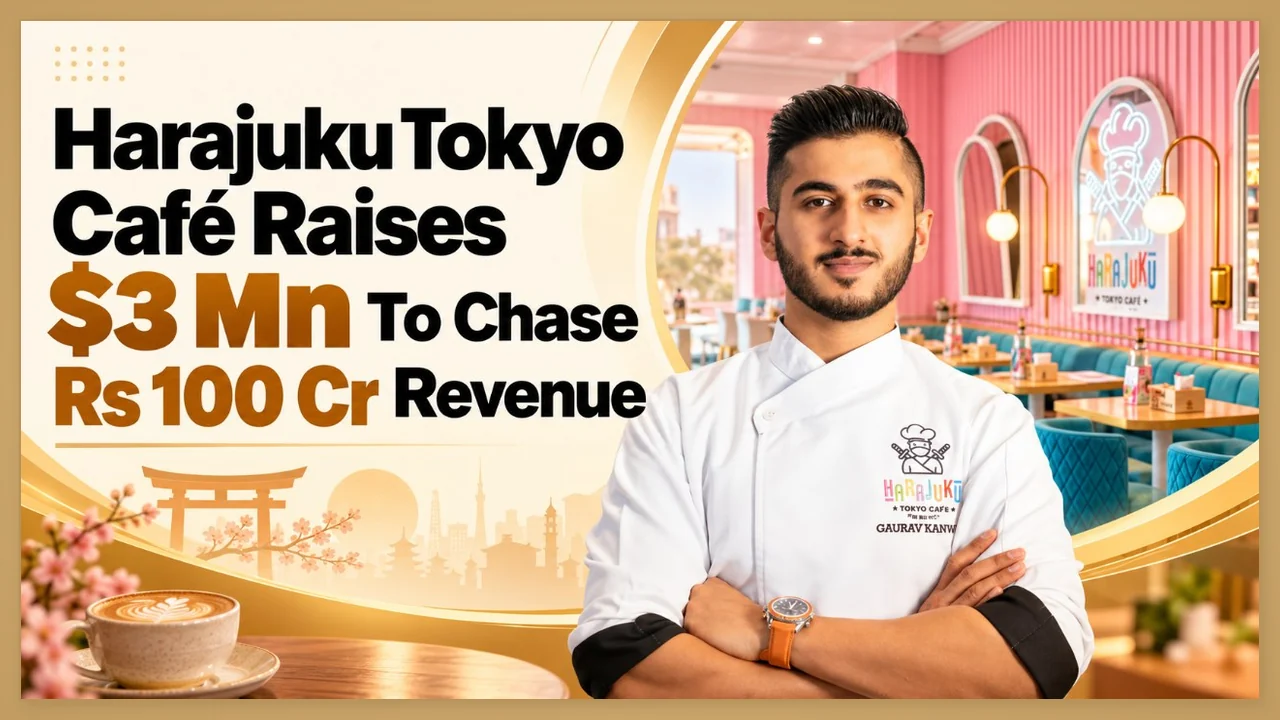
Harajuku Tokyo Café has raised $3 million, about Rs 28 crore, in a pre-Series A round led by Zero W. The Delhi-based chain runs Japanese-themed cafés and bakeries under two formats, and existing investors Indian Angel Network and Samved VC put in follow-on money. Blume Founders Fund, Brijesh Parekh Family Office and Epigamia cofounder Rahul Jain joined as new backers.
The money goes into new outlets and central kitchens. It will also fund team building and operations. Gaurav Kanwar, founder and chief executive, said Harajuku is targeting Rs 100 crore in revenue this financial year.
Read More: CureBay Bags Rs 100 Cr To Take Rural Clinics From 250 To 800
Read More: YatriKart Bags Rs 120 Cr From MMG Group To Open 1,000 Quick Stop Stores
The Round And What It Follows
Harajuku last raised $2 million in August 2025. That seed round was led by Indian Angel Network and Samved VC. LetsVenture and Capitar Ventures also participated. At the time, the company had seven outlets across Delhi-NCR and Mumbai. Its annual recurring revenue was above Rs 30 crore.
The company says it has doubled its outlet count and revenue since then. That would put the network at roughly 14 stores. Mumbai now contributes 25% of revenue. The Rs 100 crore target is roughly three times the ARR it reported at the seed stage.
Two Formats, One Supply Chain
The business is run by Craftpac Hospitality. It operates Harajuku Tokyo Café as a casual dine-in chain. Harajuku Bakehouse is the quick-service bakery format. The brand is known for conveyor-belt sushi, jiggly pancakes and ramen.
The bakery now brings in more than 30% of total revenue. In Delhi-NCR, its products sell more than 1,000 loaves of bread a week on Blinkit alone. The company wants to take the bakery into more metro cities. Harajuku processes over 1,000 orders a day across dine-in and delivery.
Why Central Kitchens Decide The Next Leg
A café chain that adds outlets without a central kitchen bets on every store getting the product right. That works until about a dozen stores. Beyond that, consistency becomes a supply problem, not a training problem.
Harajuku plans central kitchens in Mumbai and Bengaluru by December 2026. That is the point where the model either becomes repeatable or stays a cluster of good outlets. The kitchens will supply its bakery outlets. They will also support packaged food production for western and southern India.
The Market Harajuku Is Betting On
India’s food services market was worth about $78 billion in 2025. The How India Eats report by Kearney and Swiggy projects it at $120 billion to $125 billion by 2030. The organised segment is expected to grow at 12% to 14% a year. Unorganised players are seen growing at 5% to 7%.
Organised players are projected to hold about 55% of the market by 2030. That is up from 45% to 50% in 2025. Quick-service restaurants are growing fastest at 15% to 17%. Japanese food fits that shift, because it carries a premium without a full fine-dining setup.
What To Watch
Harajuku plans 10 outlets over the next two quarters. They will come up across Delhi-NCR and Mumbai. Bengaluru and Chandigarh will get their first stores. Its 2025 plan was 90 outlets across 20 cities and over Rs 200 crore in revenue by 2027. The current pace is well short of that roadmap.
Three numbers will show whether this round buys real scale. Watch the outlet count at the end of this financial year. Watch the share of revenue coming from the bakery. And watch whether the two central kitchens open on time. Zero W director Pruthvi said Japanese food in India is becoming everyday dining. He said brands that deliver a consistent experience across locations will win. Consistency is exactly what the central kitchens are for.