
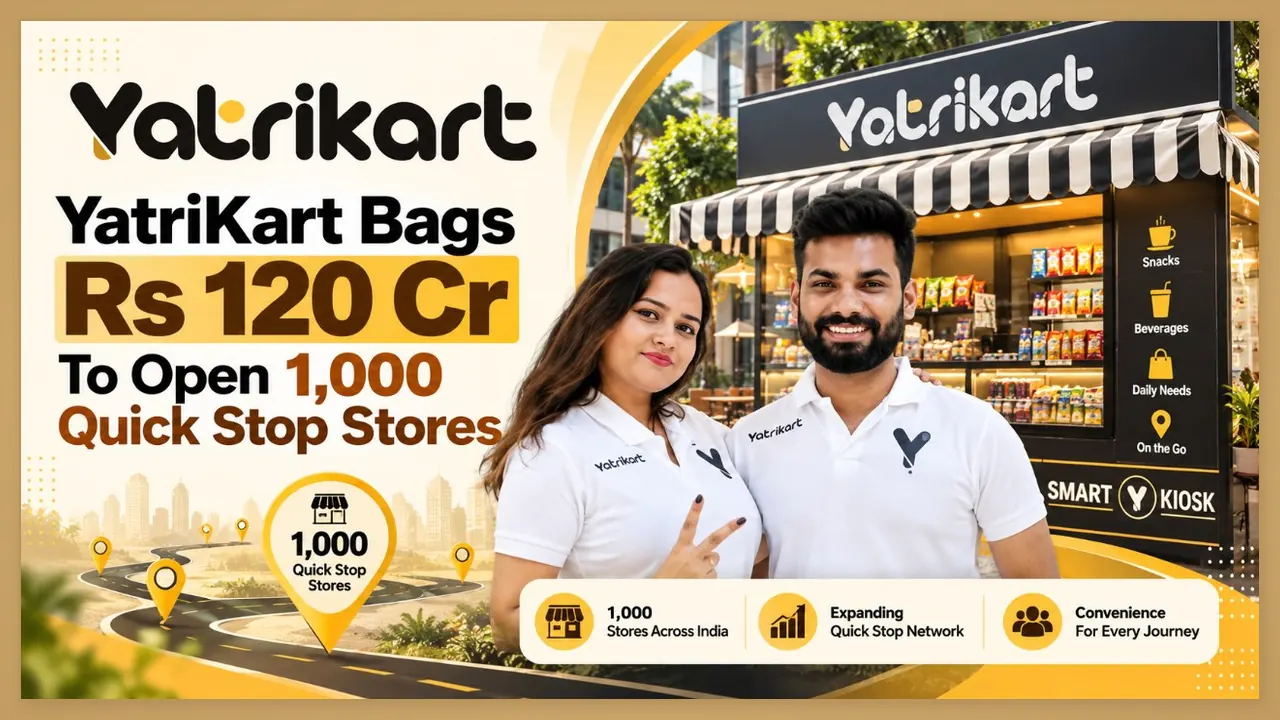
Quick-stop retail chain YatriKart has struck a Rs 120 crore partnership with MMG Group. The two will set up 1,000 Quick Stop stores across India over the next five years. The amount is a strategic commitment, not an equity funding round.
The rollout has started in Delhi NCR. YatriKart plans 100 stores in the first phase. The early push will be at fuel stations, highways, bus stands and other transit hubs. Other markets will follow in phases. YatriKart has not disclosed revenue or store-level unit economics.
Read More: Enterprise AI Startup AuxoAI Raises $20.7 Mn Series A Led By NTTVC
Read More: Noel Tata-Led Tata Trusts Plans Network Of 40-50 Not-For-Profit Hospitals
How The FICO Model Works
The deal runs on a Franchise Invested, Company Operated model. MMG Group will fund store infrastructure and capital expenditure. YatriKart will handle operating expenditure, technology, supply chain, staffing and daily operations. That split keeps YatriKart asset-light while the partner owns the build-out. The structure also lets YatriKart grow without raising equity for every new store.
Where YatriKart Already Sells
YatriKart runs more than 80 stores across eight cities. The outlets sit at petrol pumps, highways, hospitals, corporate parks, bus stands and transit hubs. Each store is small and stocked with everyday essentials rather than groceries for a full week. The company is betting that convenience demand outside the home is under-served, especially for people on the move. It is picking spots that mix high footfall with long dwell time.
The App And What It Adds
YatriKart is also readying a consumer app. Shoppers will be able to find stores along their route and order ahead. At participating fuel stations, staff will hand over the order directly to the vehicle. That last step turns a store visit into a drive-through for everyday essentials.
What The Founder Says
Gaurav Rana, founder and chief executive of YatriKart, said quick commerce changed convenience at home. He said the same access is missing outside the home. A commuter, a driver refuelling or a hospital visitor often needs only a coffee, a snack or a bottle of water. Rana said the partnership is a step towards building that network nationwide.
Quick commerce firms are now chasing footfall outside the home. The test for YatriKart is whether 1,000 stores can run without it owning the real estate. If the FICO model holds, the chain can add stores faster than rivals that pay for their own build-out.