
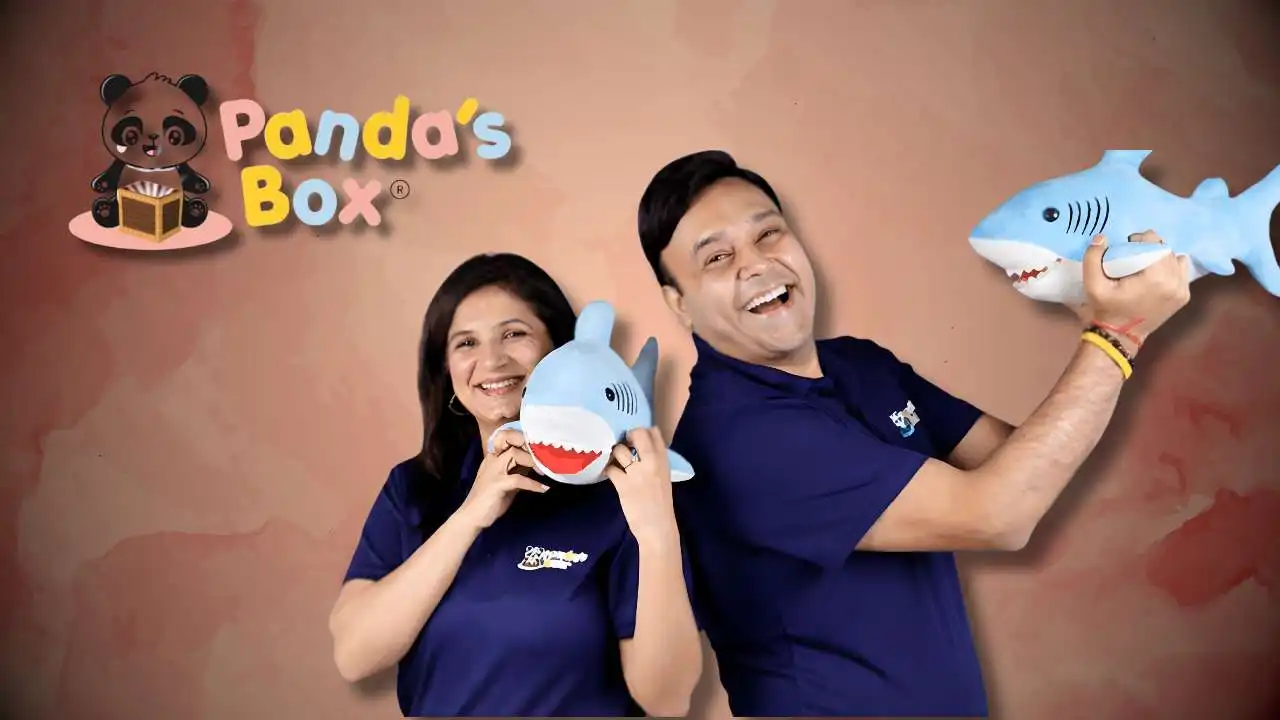
Delhi-NCR–based early learning startup Panda’s Box has come into the spotlight after raising ₹1.2 crore in fresh funding following its appearance on Shark Tank India. The investment was jointly made by Aman Gupta, co-founder of boAt, and Namita Thapar, Executive Director at Emcure Pharmaceuticals. This funding marks a key milestone for the young startup as it looks to strengthen its position in India’s fast-growing early childhood learning and educational play market.
Founded in 2022 by husband-wife duo Sukriti and Rajat Mendiratta, Panda’s Box focuses on creating screen-free learning products for children aged between 0 and 6 years. The brand is built around the idea of mindful play, encouraging early learning through physical interaction, storytelling, music, and cultural elements rather than mobile phones or tablets.
Building a Screen-Free Learning Experience for Children
At a time when excessive screen exposure among children has become a growing concern for Indian parents, Panda’s Box offers an alternative rooted in hands-on engagement. The startup designs and sells learning kits, musical books, and culturally inspired toys that aim to support a child’s cognitive, sensory, and emotional development during the most crucial early years.
What sets Panda’s Box apart is its strong emphasis on Indian culture and traditions. Many of its products introduce children to stories, chants, and values drawn from Indian heritage, presented in a playful and age-appropriate format. The idea is to make learning both meaningful and enjoyable while helping children build a deeper emotional connection with their surroundings.
Shark Tank Boost and Investor Confidence
During its pitch on Shark Tank India, Panda’s Box impressed the investors with its product vision, market traction, and clear understanding of parental needs. The ₹1.2 crore deal not only provides capital support but also brings in strategic guidance from two well-known business leaders.
The founders highlighted that the company is already generating steady revenues and is operating at a healthy monthly run rate. This performance reflects a growing demand for thoughtfully designed early learning products, especially among urban and semi-urban families who are increasingly conscious about holistic child development.
Plans for Scaling and Expansion
The newly raised funds will be utilised to scale Panda’s Box across multiple fronts. A significant portion of the capital will go into product innovation, allowing the brand to expand its range of learning kits and explore new formats tailored to different age groups.
The company also plans to strengthen its distribution network, both online and offline, to reach a wider customer base across India. Marketing and brand-building efforts will be scaled up to increase awareness among parents looking for alternatives to digital learning tools. Operational expansion and team strengthening are also part of the roadmap as the startup prepares for its next growth phase.
Competing in India’s Early Learning Market
India’s early learning and educational toys space has seen strong growth in recent years, with several startups offering activity-based kits and learning games. However, Panda’s Box is carving a distinct niche by focusing on screen-free, culturally rooted learning experiences. This approach resonates with parents who want a balance between modern parenting and traditional values.
By combining thoughtful design, storytelling, and learning through play, the startup is tapping into a segment that prioritises quality engagement over passive consumption. The backing from Shark Tank investors further strengthens its credibility in a competitive market.
Looking Ahead
With fresh capital and strategic support in place, Panda’s Box is well-positioned to scale its operations and expand its impact. As awareness around mindful parenting and early childhood development continues to grow in India, the startup’s focus on purposeful, hands-on learning could help it become a trusted name among young families.
The Shark Tank investment not only validates Panda’s Box’s vision but also highlights a broader shift in consumer demand towards meaningful, screen-free experiences for children in their formative years.