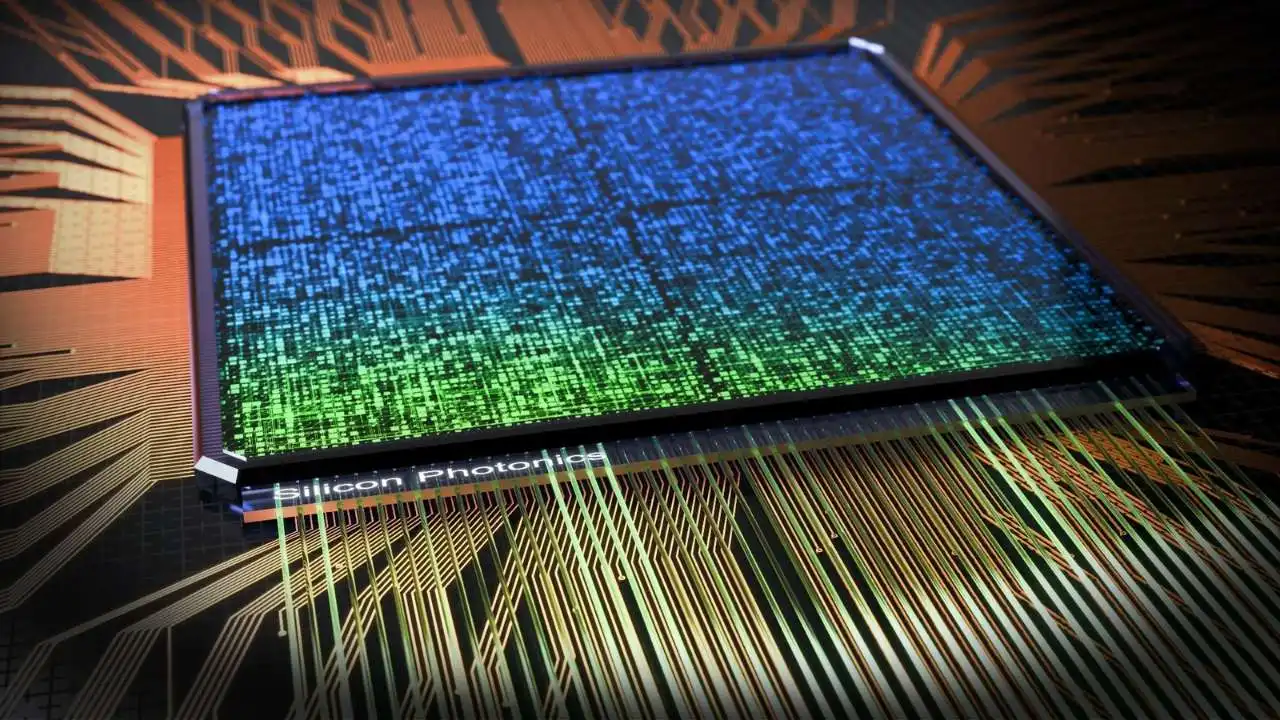
Scientists have taken a major step toward solving one of quantum computing’s biggest challenges with the development of a photon-based microchip that offers highly precise and scalable laser control. This breakthrough could significantly accelerate the development of practical quantum computers, making large-scale systems far more achievable than before.
Quantum computers rely on qubits instead of conventional bits, allowing them to perform complex calculations at extraordinary speeds. However, controlling qubits — especially in systems that depend on light — requires extremely stable and finely tuned lasers. Until now, managing this level of precision involved bulky, expensive equipment that limited scalability.
The newly developed photon microchip changes this equation entirely by shrinking laser-control components to the size of a microchip while maintaining exceptional accuracy.
Why Laser Control Is Critical for Quantum Machines
In many quantum computing architectures, lasers are used to create, manipulate, and read quantum states. Even the slightest instability in laser frequency can disrupt qubit behaviour, causing errors during calculations. Traditional laboratory-scale laser controllers consume large amounts of power and generate excess heat, making it nearly impossible to scale quantum systems beyond a limited number of qubits.
The photon microchip introduces a compact solution that controls laser frequencies with remarkable stability using integrated photonic technology. This allows precise interaction with qubits while dramatically reducing energy consumption and physical space.
How the Photon Microchip Works
At the heart of this innovation is an advanced optical phase modulation system built directly onto a chip. The device uses high-frequency microwave vibrations to adjust laser light with extreme accuracy. Despite its tiny size — thinner than a human hair — the chip delivers performance comparable to much larger systems.
Importantly, the design minimises heat output, a critical factor in quantum environments where temperature stability is essential. With lower power usage and less thermal interference, multiple laser-control channels can be placed close together without affecting performance.
Built Using Standard Semiconductor Manufacturing
One of the most promising aspects of the photon microchip is that it can be produced using standard semiconductor manufacturing techniques, similar to those used for conventional electronic chips. This means the technology is not limited to custom labs or specialised facilities.
Mass production becomes feasible, allowing researchers and companies to manufacture large numbers of identical chips at lower cost. This manufacturing compatibility is a major step toward scalable quantum computing platforms that can move beyond experimental setups.
Implications for Quantum Research and India’s Tech Ecosystem
For countries investing heavily in advanced computing and deep-tech research, including India, this development could have long-term benefits. Affordable, scalable photonic control systems could strengthen research institutions, startups, and national quantum missions working on next-generation technologies.
As quantum computing expands into areas such as cryptography, materials science, healthcare, logistics, and climate modelling, innovations like the photon microchip help bridge the gap between theoretical potential and real-world application.
The Road Ahead for Quantum Computing
While this breakthrough addresses a critical bottleneck, researchers acknowledge that further work is needed to fully integrate all quantum components onto single photonic platforms. Ensuring consistent performance across thousands or millions of qubits will require continued innovation.
Nevertheless, the photon microchip represents a decisive move toward practical, scalable quantum computing. By delivering precise laser control in a compact and energy-efficient form, it brings the vision of powerful quantum machines one step closer to reality.
As research progresses, this technology could redefine how quantum computers are built — not as massive laboratory systems, but as finely engineered, chip-based machines ready for real-world impact.