
Namma Yatri Raises Rs 27.25 Cr Led By Michael & Susan Dell Foundation

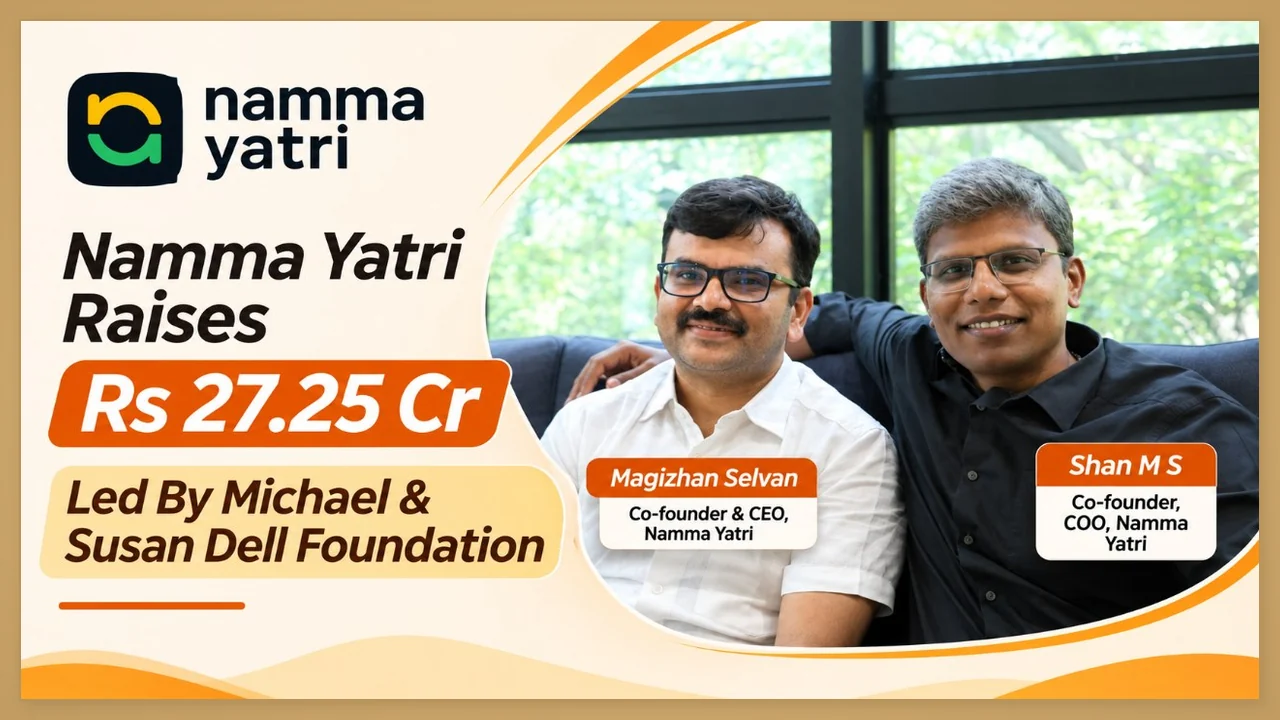
Ride-hailing platform Namma Yatri has raised Rs 27.25 crore in an ongoing pre-Series A round led by the Michael and Susan Dell Foundation, with Narayana Hrudayalaya participating.
The Namma Yatri board allotted 86,31,602 Series A2 compulsorily convertible preference shares at Rs 31.57 each, along with 10 equity shares.
Who Put In How Much
The Dell Foundation invested Rs 27 crore and Narayana Hrudayalaya put in Rs 25 lakh.
Read More: Matters.AI Raises Rs 110 Cr In Pre-Series A Led By Tanglin Ventures
Entrackr estimates the post-money valuation at around Rs 526 crore. Is broadly flat against the previous round.
Read More: Ionic Wealth Raises Rs 177 Cr From Angel One And Marquee Families
A flat round is not a failure signal for this business. Namma Yatri is a platform built around a zero-commission model. Investors in it are buying distribution and social impact rather than a margin story.
The Model
Moving Tech, which operates Namma Yatri, operates mobility platforms including Namma Yatri, Yatri Sathi and Bharat Taxi.
It runs a direct-to-driver model that does not charge commissions. Drivers pay a subscription instead, and the platform does not take a cut of each trip.
That structure changes incentives. In a commission model, the platform earns more when fares rise and when more trips are completed. In a subscription model, the platform earns the same whether a driver has a good day or a bad one.
The Funding History
In March 2026, the company raised $4.4 million in a pre-Series A extension led by Juspay founder Vimal Kumar, with Blume Ventures, Antler and others participating.
The Dell Foundation’s entry follows that round and brings a philanthropic investor onto the cap table alongside venture funds.
That mix is deliberate. A zero-commission platform needs patient capital because the model is designed to keep take rates low. Limits how fast revenue can compound.
Why It Matters in Indian Mobility
For Namma Yatri, ride-hailing in India has been dominated by two large aggregators that charge commissions of 20% to 30% on each trip.
Driver earnings in that system depend on the platform’s pricing decisions. Driver protests over commissions have become a recurring feature of the market.
A subscription model is an attempt to solve that conflict structurally rather than through periodic incentives.
Namma Yatri also runs on the ONDC network. Lets it plug into a shared set of buyers and sellers rather than building every integration itself.
That choice keeps costs low and ties the platform’s growth to how quickly ONDC mobility adoption spreads across cities.
The company’s three brands serve different markets. Each one adds driver supply that can be shared across the group.
The zero-commission model also has a hard ceiling on revenue, because the platform cannot raise take rates without breaking its own promise.
That means scale has to come from more drivers and more cities rather than from higher fees per trip.
For investors like the Dell Foundation, that trade-off is the point rather than a problem, which is why a flat valuation did not deter them.
What to Watch
Three things will decide whether Namma Yatri scales. The first is driver retention. A subscription only works if drivers earn more on this platform than on a commission-based one.
The second is rider supply. A platform with no commission still needs enough cabs on the road to keep waiting times low. Riders choose on availability.
The third is city expansion economics. Each new city needs local onboarding. The cost of that does not fall with scale the way software costs do.
Sudip Kumar is a Writer at Bharat Fast, contributing to the platform for more than six months. With an interest in startups, entrepreneurship, digital media and graphics designing, he enjoys exploring emerging businesses and sharing informative stories with readers.


