altM Raises $10.3 Mn To Make Chemicals From Farm Waste

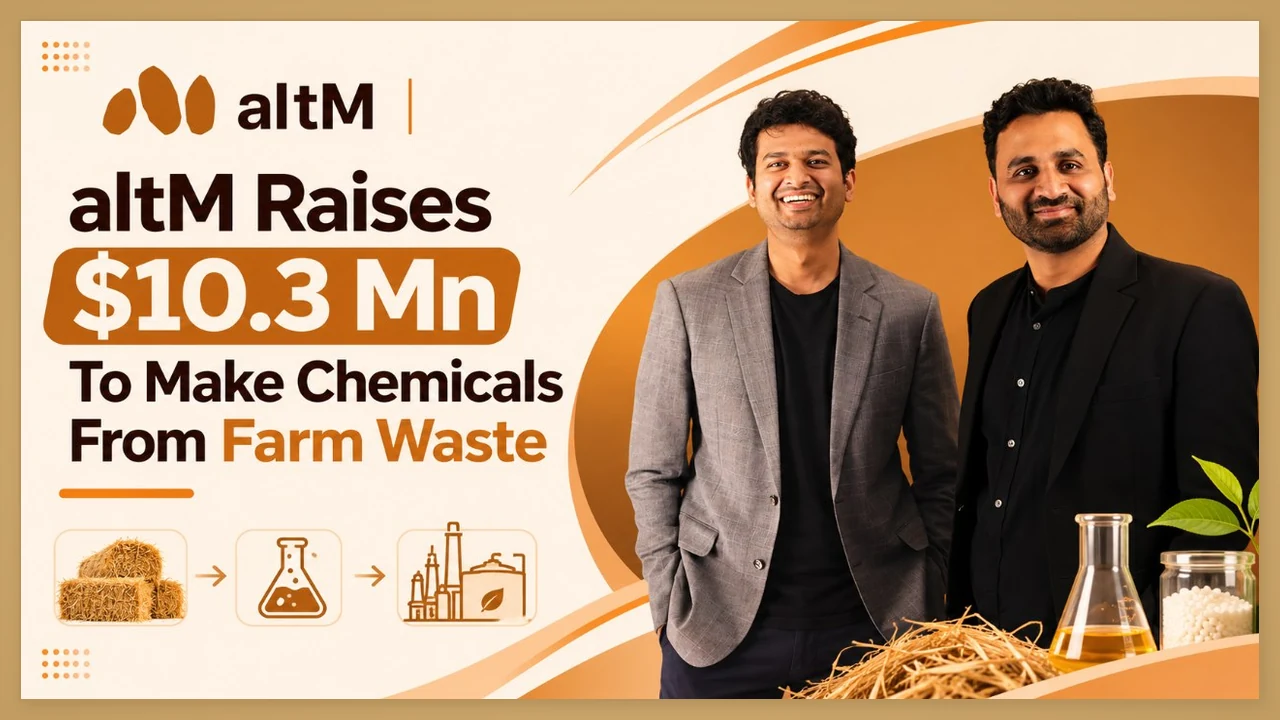
altM, a Bengaluru-based cleantech startup, has raised $10.3 million (Rs 97.5 crore) in a Series A round led by Rainmatter and Mela Ventures. Both are new investors in the company.
Existing backers Omnivore, Theia Ventures, Aureolis Ventures and Spectrum Impact also participated. Total funding at altM now stands at over $14 million.
What altM Makes
altM converts agricultural residue into specialty chemicals and biomaterials. Its feedstock is lignocellulosic biomass: sugarcane bagasse, rice straw and similar leftovers from farming.
Read More: Vultr Launches 20 MW AI Supercompute Cluster In Chennai With 10,000 AMD GPUs

The altM platform separates the three main fractions of that biomass. Cellulose, hemicellulose and lignin each become different products from a single input, which is what makes the economics work.
Read More: IISc Spin-Out Venomics AI Raises $2.7 Mn To Turn Venom Into Drugs
Those materials go into beauty and personal care, textiles, industrial chemicals, construction, packaging and consumer goods. Every one of them replaces a fossil-derived raw material.
The Founders
India’s specialty chemicals market is large and mostly imported at the high end. A domestic producer with a cost advantage from local feedstock has an obvious opening in that gap.
altM was founded in 2022 by Apoorv Garg and Yugal Raj Jain, both former Tesla executives. Garg is chief executive.
That background matters for altM. Scaling a chemical process from a pilot line to a commercial plant is a manufacturing discipline, not a laboratory one, and Tesla alumni have run that playbook before.
Where the Money Goes
A large part of the round funds a 1,000-tonne-per-year commercial manufacturing facility, targeted for 2028. The rest goes into sales and research.
“A large chunk of our investment will go into building the next 1,000-tonne-per-year commercial plant,” Garg told Inc42. He said the company’s three focus areas are converting revenue from the pilot plant, building a sales pipeline and expanding manufacturing.
altM plans to launch its first beauty and personal care products in the coming quarter. Over five years it aims to scale capacity to 10,000 tonnes a year.
Why the Feedstock Choice Matters
Biomass refining is not a new idea. Several Indian companies have tried to convert agri waste into ethanol, furfural or lignin-based binders over the past decade. Most struggled on feedstock logistics rather than chemistry.
India produces hundreds of millions of tonnes of crop residue every year, and much of it is burned. Stubble burning is a seasonal air-quality crisis in the north, and any process that pays farmers for that waste changes the incentive.
For altM, the commercial logic is equally important. Fossil-derived chemicals carry volatile input costs, while agricultural residue is cheap and renewable.
The hard part for altM is consistency. Biomass varies by season, region and crop, and a chemical plant needs a steady, predictable input. That is why most biomass startups stall between pilot and commercial scale.
What to Watch
For now, altM’s most useful asset is its timing. Buyers in beauty and packaging are under pressure to show lower fossil content in their supply chains, and that pressure is the company’s sales pitch.
The recent history of Indian cleantech hardware is a warning. Companies have raised well, built a plant and then discovered that their product was a commodity sold on price by buyers who did not care about sustainability claims.
Three things will decide whether altM becomes a chemical company or a well-funded pilot. The first is the 2028 plant, because a 1,000-tonne facility on schedule would be unusual in this sector.
The second is offtake. Announcing beauty and personal care products is easy; getting a large brand to specify altM’s ingredient in its formulation is the actual sale.
The third is unit economics per tonne. Biomass conversion competes with petrochemical prices, and the spread has to survive without subsidy.
Sudip Kumar is a Writer at Bharat Fast, contributing to the platform for more than six months. With an interest in startups, entrepreneurship, digital media and graphics designing, he enjoys exploring emerging businesses and sharing informative stories with readers.
More from this section
DriveU Net Profit Doubles To Rs 3.6 Cr In FY26 As NTV Hits Rs 131 Cr

ShareChat Parent Revenue Crosses Rs 1,000 Cr In FY26, Loss Narrows To Rs 672 Cr

GIVA Raises Rs 975 Cr Led By Multiples To Cross 1,000 Stores