A short video shared on social media recently triggered a nationwide discussion on the realities of India’s gig economy. In the viral clip, a Blinkit delivery partner revealed that he earned just ₹763 after completing 28 deliveries over nearly 15 hours of continuous work. The figures shocked viewers, raising uncomfortable questions about earnings, work hours, and dignity of labour for app-based delivery workers.
The video, shared by the delivery partner himself, showed screenshots from the app highlighting low per-delivery payouts. As the clip spread rapidly across Instagram and other platforms, it resonated with millions of Indians who depend daily on quick commerce services but rarely see the struggles behind seamless doorstep delivery.
Social Media Reacts to Low Gig Earnings
The reaction online was swift and emotional. Many users expressed disbelief at the earnings, pointing out that the amount barely covered daily expenses after fuel, mobile data, and vehicle maintenance costs. Others debated the larger issue of whether flexibility in gig work truly compensates for unstable income and long working hours.
Some users sympathised deeply with the rider, while others highlighted how algorithm-based payouts and fluctuating incentives create unpredictable earning patterns. The conversation soon moved beyond one individual, becoming a broader debate on how India treats its gig workforce — a segment that includes delivery partners, cab drivers, and warehouse staff powering the digital economy.
Raghav Chadha Steps In After Parliament Discussion
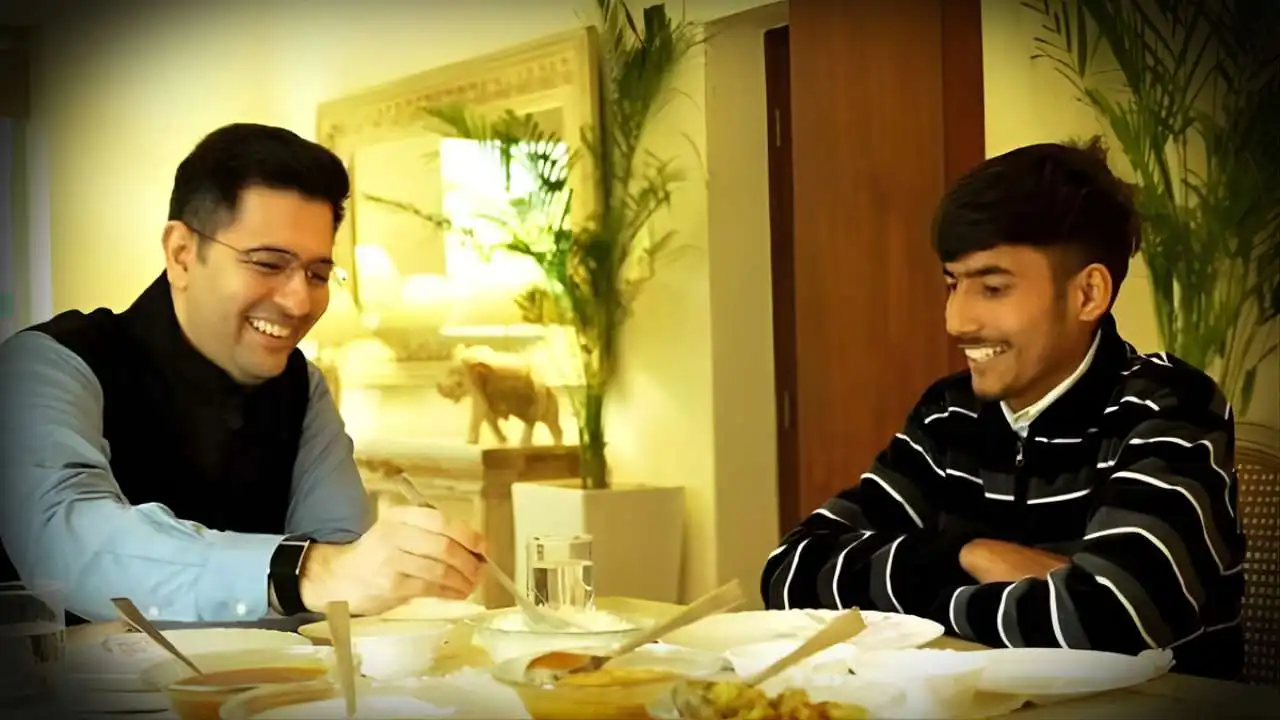
The video reached the attention of Raghav Chadha, who had recently raised concerns about gig workers during the Winter Session of Parliament. Not limiting his response to speeches alone, Chadha took a more personal step by inviting the Blinkit delivery partner to his home for lunch.
The meeting was intended to understand the ground reality directly from someone living it every day. According to shared accounts, the delivery partner spoke openly about the pressures of meeting targets, working extended hours, and the absence of job security or social safety nets.
A Conversation Beyond Formal Politics
What stood out was the tone of the interaction. The delivery partner later shared that he was treated with respect and felt heard. The discussion wasn’t framed as charity or publicity, but as an exchange meant to highlight real challenges faced by gig workers.
Chadha reportedly listened to concerns around earnings volatility, mental fatigue from long hours, and the impact of performance-based algorithms that often leave workers unsure of daily income. The interaction struck a chord online, with many praising the MP for engaging beyond political statements.
Spotlight on Blinkit and the Gig Economy Model
While the focus remained on one delivery partner, the conversation inevitably turned toward platforms like Blinkit and the broader gig economy model. Experts note that while quick commerce has transformed urban convenience, it relies heavily on a workforce that operates without traditional employment benefits.
Delivery partners are typically classified as independent workers, which means no fixed salary, no paid leave, and limited access to insurance or retirement benefits. Earnings depend on order volume, peak-hour incentives, and demand patterns that workers cannot control.
Why This Moment Matters
The incident has become symbolic of a larger shift in public awareness. More Indians are questioning whether speed and convenience should come at the cost of worker well-being. The meeting between an MP and a delivery rider has added political visibility to an issue long discussed only on social media.
As India’s gig economy continues to expand, the story of ₹763 for 15 hours of work serves as a reminder that growth must be balanced with fairness. For many, this episode isn’t just about one delivery partner, but about recognising the human effort behind every “delivered” notification on a smartphone screen.
The hope now is that conversations like these translate into meaningful policy discussions, ensuring that India’s digital progress includes dignity, protection, and fair opportunities for those powering it every day.