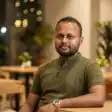
KOTA, RAJASTHAN: At 17, Vinayak Raj is balancing Class 12 studies and IIT-JEE preparation with interests in climate policy, computer science, international diplomacy and competitive shooting. Originally from Bodh Gaya, Bihar, the student has pursued activities that extend beyond conventional classroom learning.
While physics and advanced mathematics remain central to his academic routine in Kota, Raj has also explored climate economics, participated in Model United Nations (MUN) conferences, contributed to digital literacy initiatives and competed in precision shooting. His journey reflects an interest in connecting technical knowledge with global challenges and community learning.
A Foundation in Boarding School Leadership
Raj’s multidisciplinary interests began taking shape during his years at Welham Boys’ School in Dehradun, where he studied from Grades 8 to 10. The boarding school environment introduced him to debates, institutional governance, military history and competitive sports.
During this period, he received a Certificate of Commendable Contribution at the school’s Military History Seminar for his analysis of defence strategy. He also developed an interest in 10-metre air rifle shooting and qualified to represent his school at the XVII All India IPSC Boys Shooting Championship, hosted by Rajkumar College in Raipur.
Reflecting on his shooting experience, Raj highlighted the importance of breath control, neuromuscular stability and composure. These skills, he noted, also have relevance in demanding academic environments, where concentration and consistency are essential.
Scrutinizing Global Carbon Markets
Raj has extended his interest in global affairs into research on environmental policy and carbon markets. His white paper, Global Emissions and Carbon Offsetting: Examining Conservational Approaches and Regulatory Gaps, was published and featured on the Model G20 platform.
The paper examines challenges associated with voluntary and compliance carbon credit markets, including the credibility of emission reductions and the need for transparent accounting systems.
One of its key themes is additionality, which questions whether carbon credits are being awarded to projects that would have taken place even without carbon finance. Raj also examines permanence risks, particularly how forest fires and illegal logging can undermine long-term carbon storage in natural ecosystems.
Another area of focus is carbon accounting under Article 6 of the Paris Agreement. The paper advocates auditable digital registries to improve transparency and reduce the risk of double-counting emission reductions across countries.
The research also considers how carbon finance can better support Indigenous communities and agricultural landholders who contribute to conservation. It highlights the importance of equitable revenue distribution rather than allowing the benefits to flow primarily to financial intermediaries.
Beyond climate policy, Raj has explored subjects including geopolitics, Middle Eastern energy diplomacy, observational astrophysics and behavioural criminology, reflecting the breadth of his academic interests.
Diplomacy and Classroom Outreach
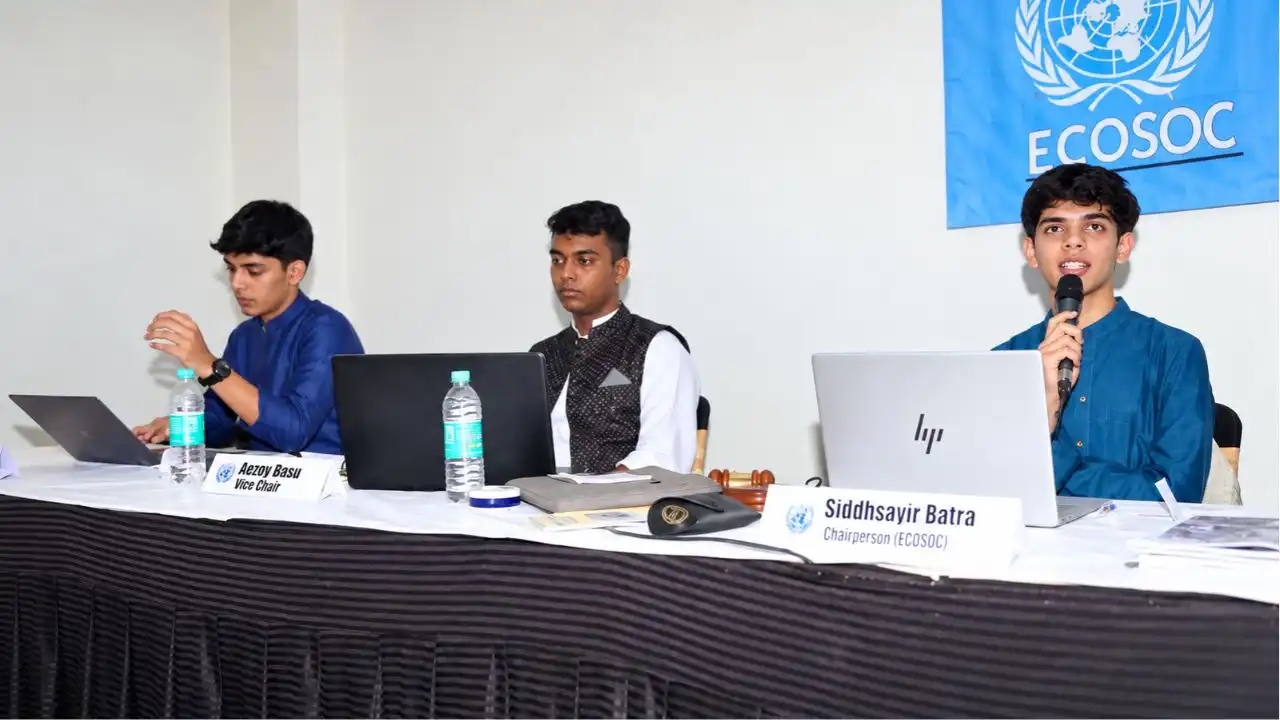
Raj’s engagement with international affairs also includes participation in student diplomatic simulations. At WELMUN 2024, he served as Rapporteur for the United Nations Economic and Social Council (ECOSOC), helping manage committee proceedings, debate schedules and draft resolutions.
He also represented Saudi Arabia at OxfordMUN, where discussions included the outcomes of COP28 and the challenges of economic diversification in hydrocarbon-dependent economies. The simulated proceedings exposed him to questions surrounding energy transition, international cooperation and green technology funding.
Alongside these academic activities, Raj has participated in digital literacy initiatives in Rajasthan. He has volunteered to conduct basic digital literacy workshops in government schools, introducing students to computer systems and safe online practices.
He has also led interactive sessions with science-stream students in Kota, discussing connections between algorithmic thinking, school-level physics and engineering design. These activities reflect his interest in making technical concepts more accessible to students beyond specialised academic environments.
Looking Ahead to Computer Science
Raj is proficient in C, C++, Java and Python. He has also undertaken technical internships with early-stage ventures, including Nivaan and VJ Nucleus, where he gained exposure to software architecture and collaborative development workflows.
These experiences have helped him explore how programming concepts are applied in practical settings. His interests span software development, data systems and emerging technologies, with a particular focus on the potential intersection of machine intelligence and environmental governance.
Looking ahead, Raj aims to pursue an undergraduate degree in Computer Science at an internationally recognised research university. He hopes to build a strong technical foundation while continuing to explore how technology can contribute to addressing environmental and societal challenges.
As he completes his senior secondary education and prepares for competitive entrance examinations, Raj continues to balance academic priorities with research, extracurricular activities and community engagement.
His guiding principle—learning with curiosity, thinking beyond boundaries and using knowledge to build a better tomorrow—captures the approach he hopes to carry into higher education. For Raj, the goal is not simply to study technology, but also to understand how it can be applied to real-world problems.