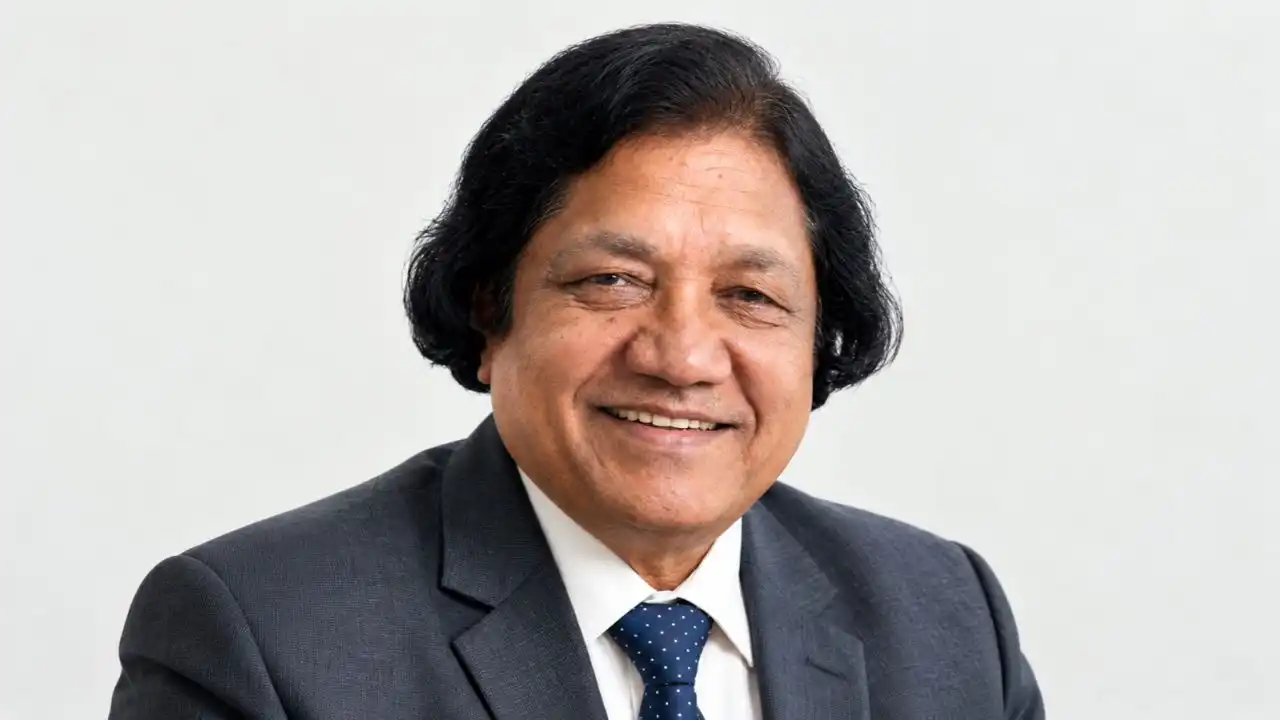
KOLHAPUR, MAHARASHTRA: Prof. (Dr.) Arjun Chavan has built a distinctive literary career through Hindi ghazals, satire, travel writing, literary criticism and translation. A scholar whose mother tongue is Marathi, he has dedicated decades to Hindi literature while contributing to its development across linguistic and cultural boundaries. His work includes more than 65 published books, 30 edited volumes and numerous literary contributions that have attracted attention from writers, scholars and researchers in India and abroad.
One of the notable milestones in his literary journey came on 6 January 2024, when a 904-page Abhinandan Granth dedicated to him was released at Shivaji University in Kolhapur. Edited by Dr. Manohar Bhandare and published by Vani Prakashan, New Delhi, the volume brought together essays by writers and scholars from India and other countries, reflecting the range of his contributions to Hindi literature.
From his extensive ghazal writing to his academic work and international participation in Hindi conferences, Prof. Chavan’s journey highlights the role of multilingual writers in strengthening India’s literary traditions.
Prof. Arjun Chavan’s Contribution to Hindi Ghazal Literature
Ghazal writing occupies a central place in Prof. Arjun Chavan’s literary work. He has written 22 ghazal collections, each comprising 105 ghazals, amounting to a total of 2,310 compositions. According to the provided information, these collections are in the final stage of publication.
His titles reflect an interest in everyday life, social behaviour and human relationships. Collections such as Makaan Nahin, Man ko Bhi Saaf Kar, Log Aaj-kal Jaane Kya-Kya Khate Hain and Pyaar-Vyaar ki Ghazalen Likhte Nahin Hum bring ordinary experiences and contemporary concerns into the literary form.
His engagement with the Hindi and Urdu ghazal traditions is also evident in the title Ghalib Poonji, Dushyant Mera Lakshya Hai. The reference to Mirza Ghalib and Dushyant Kumar expresses his literary connection with two influential figures associated with the ghazal tradition.
Through his writing, Prof. Chavan explores the possibilities of using the ghazal to discuss contemporary society, personal values and changing human relationships.
Five Years of Daily Writing on Friendship
Alongside his ghazal collections, Prof. Chavan has demonstrated a strong commitment to disciplined writing. For five consecutive years, he wrote one composition every day on the theme of friendship.
The project, titled Dastak Dosti ke Dastan ki, later took shape as a shayari collection. Its central theme reflects the importance of friendship as a continuing subject of human experience and literary expression.
Writing on one theme for an extended period requires consistency and the ability to approach familiar ideas from different perspectives. The project stands out as an example of how a sustained writing practice can develop into a substantial literary body of work.
Hindi Satire and Literary Criticism
Satire is another important aspect of Prof. Chavan’s writing. His collection Zara Yaad Karo Qurbani, comprising ideological satirical essays, received the Maharashtra Hindi Parishad’s award for best creative literature in 2005.
His broader literary portfolio includes short stories, laghukatha or flash fiction, lyrics, muktak poetry, essays and literary criticism. His story collection Goonga, Behra tatha Anya Kahaniyan adds another dimension to his creative writing.
In literary criticism, his works include Upanyaskar Rajendra Yadav, Dalit aur Adivasi Sahitya Chintan ke Aadya Bindu and Vishwamanch par Hindi: Vividh Aayam. These titles reflect his engagement with Hindi literary figures, marginalised literary perspectives and the wider presence of Hindi on the international stage.
Beyond his own books, Prof. Chavan has edited 30 volumes and written forewords for more than 50 books, contributing to the work of other writers and the wider literary community.
Travel Writing and Translation Across Languages
Travel has provided another subject for Prof. Chavan’s literary exploration. His book Mauritius: Ek Sanskritik Yatra, published by Vani Prakashan in 2016, documents a cultural journey and has also been translated into Marathi.
His manuscript Bharat se Bahar Bharat received a travelogue honour carrying a cash prize of Rs. 51,000 at Tashkent in 2015, according to the supplied biographical details.
Translation is equally significant in his work. Prof. Chavan has brought Marathi literature into Hindi, including stories by V. S. Khandekar and poems by D. B. Ratnakar. His translation-related contributions also include an editorial from Mooknayak, the periodical edited by Dr. B. R. Ambedkar.
Such work demonstrates the role of translation in making literary ideas accessible to readers who speak different languages. His career also reflects the relationship between Marathi literary experience and his sustained engagement with Hindi.
Shivaji University and His Academic Journey
Prof. Chavan began teaching in higher education in Maharashtra in 1986 and joined the Department of Hindi at Shivaji University, Kolhapur, in 1993.
His academic career combined teaching, research, literary criticism and participation in scholarly discussions. He retired as Professor and Head of the department in 2021 and continued as an Honorary Professor until 2024, according to the provided information.
His contribution to Hindi writing was recognised nationally in 2003, when he received an award for non-Hindi-speaking Hindi writers from then Prime Minister Atal Bihari Vajpayee.
The recognition was particularly meaningful in the context of his linguistic background. Although Marathi is his mother tongue, Hindi has remained a major language of his creative and academic work.
International Seminars and the Global Reach of Hindi
Prof. Chavan has participated in more than 550 seminars as a chairperson, chief guest, keynote speaker, expert or paper presenter. More than 50 of these events were international, according to his profile.
His international engagements include an Indo-Mauritian International Hindi Seminar in Mauritius in January 2015 and academic events in Tashkent in May 2015. In 2016, he participated in programmes in Tashkent, Samarkand and Saint Petersburg, discussing Indian, Uzbek and Russian literature and culture.
On 27 May 2016, he presented a paper in Moscow on India-Russia relations through language, literature and culture. More recently, on 27 August 2025, he delivered a keynote address at the University of Kelaniya in Sri Lanka on the theme of Hindi and Sinhala language, literature and culture.
These engagements reflect the opportunities for literary exchange created by international academic platforms. They also place Prof. Chavan’s work within broader conversations about language, cultural identity and literary connections between countries.
Awards and Recognition Across the Years
Prof. Chavan has received more than 50 awards and honours during his literary career. His recognitions include the Pandit Mahavir Prasad Dwivedi Award, Bharatendu Bhushan National Honour, Sahitya Shiromani Samman in Mauritius and the Pablo Neruda International Award for Excellence in Literature in Nagpur.
Other honours listed in his profile include the Hindi Seva Samman, Hindi Bhushan Samman, Hindi Sarjana Samman, Shankardayal Singh Pratibha Samman and Shreshtha Srijan Vibhuti Rashtriya Samman.
His more recent recognitions include the Mahakavi Kalidas Samman in March 2024, a Lifetime Achievement Award in March 2025 and the International Premchand Samman in 2026.
These awards represent recognition from different literary and cultural organisations, reflecting the variety of forms and subjects covered by his work.
A Literary Career That Continues to Inspire Research
Prof. Chavan’s writing has also become a subject of academic research. Scholars at universities across India are pursuing doctoral studies on his life and literature, while more than two dozen books by other authors have been dedicated to him, according to the supplied information.
His work has drawn appreciation from literary figures including Prof. Dinesh Chamola ‘Shailesh’, Girish Pankaj and Dr. Giriraj Sharan Agrawal. Their observations highlight the people-centred perspective of his ghazals and the relationship between literature, social awareness and human values.
Prof. Chavan also serves as Maharashtra State President of the Vishwa Hindi Parishad, Delhi, continuing his involvement in Hindi literary and cultural activities.
With more than 25 books reportedly ready for publication, covering ghazals, songs, poetry, short fiction, translations and critical essays, his creative work remains ongoing.
Prof. Arjun Chavan’s literary journey brings together academic scholarship, sustained creative discipline and an interest in communication across languages. His contributions offer an example of how writers can engage with Hindi literature while drawing on experiences shaped by another linguistic tradition, helping connect readers, scholars and literary communities across India and beyond.