
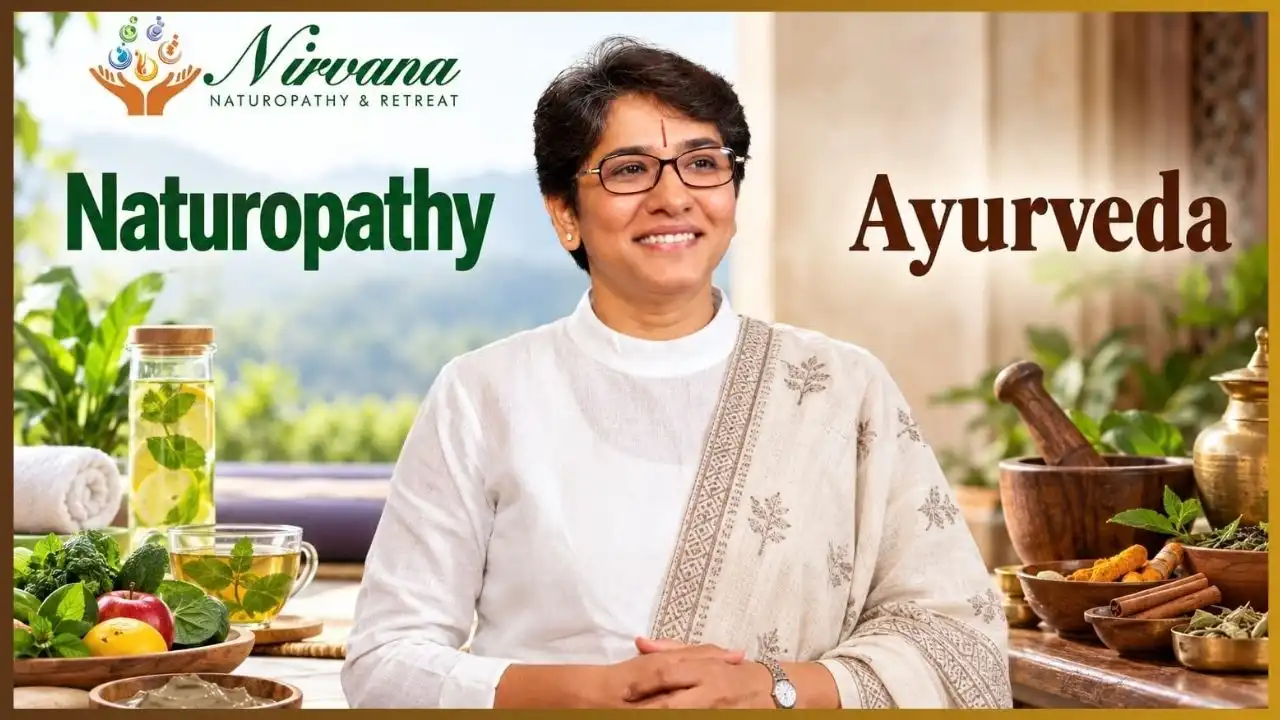
As modern lifestyles become increasingly demanding, conversations around natural wellness, healthy living and preventive care are gaining wider attention. At Nirvana Naturopathy and Retreat in Igatpuri, Nashik, Gurumaa Yogita Khatri presents naturopathy as an approach that brings people back to everyday fundamentals such as food, sleep, movement, breathing, sunlight, hydration, rest and stress management.
The growing discussion around naturopathy vs Ayurveda is not necessarily about deciding which approach is better. Instead, it offers an opportunity to understand how the two traditions differ and how naturopathy can provide a practical framework for people looking to reassess their daily habits.
At its core, the approach focuses on a simple question: are modern routines supporting overall wellbeing, or gradually moving people away from the basics needed for a balanced lifestyle?
Naturopathy vs Ayurveda: Understanding the Difference
Ayurveda is an ancient Indian system of health and wellness that views an individual through principles including Vata, Pitta and Kapha. It considers factors such as constitution, digestion, daily routine and seasonal changes, with traditional practices that may include diet, herbs, massage and specialised therapies.
Naturopathy, meanwhile, places greater emphasis on living in closer alignment with nature and supporting the body’s natural processes through lifestyle practices. Food, hydration, physical activity, fresh air, sunlight, rest, yoga, breathing exercises and nature-based therapies can form important parts of a naturopathic approach.
While their philosophies and methods differ, both traditions place importance on lifestyle and individual wellbeing rather than treating health as a one-dimensional subject.
Why Naturopathy Can Be Relevant to Modern Lifestyles
For many people, modern work patterns have changed the way they eat, sleep and move. Long working hours, prolonged screen exposure, irregular meals, limited exercise and inadequate sleep have become familiar parts of everyday life, particularly for people working in cities.
A simple example is a desk-based professional who sleeps for only five or six hours, spends most of the day sitting and frequently depends on packaged or convenience food. Rather than immediately adding another complicated routine, naturopathy encourages attention to these basic lifestyle factors.
What a person eats, how well they sleep, how frequently they move, how they breathe and how they recover from daily stress can all become part of a broader conversation around wellness.
A Wellness Reset Through Nature and Routine
A naturopathy retreat can offer more than a temporary change in surroundings. For some people, stepping away from crowded schedules and constant digital stimulation can create space to observe habits that are difficult to notice during a busy routine.
At Nirvana Naturopathy and Retreat in Igatpuri, Nashik, the natural surroundings and quieter environment are presented as supportive elements for reconnecting with a slower, more structured routine. The objective is not simply to follow a short-term wellness programme, but to understand which healthier habits can realistically continue after returning to everyday life.
Common Naturopathy Therapies
Depending on individual requirements, naturopathy programmes may incorporate practices such as hydrotherapy, mud therapy, massage, yoga, breathing exercises and diet therapy.
Hydrotherapy uses water in different forms and temperatures, while mud applications have traditionally been used as part of nature-based wellness practices. Yoga and breathing exercises can encourage movement, relaxation and greater awareness of the body, while diet therapy focuses on wholesome food choices and reducing excessive dependence on highly processed meals.
Fasting may also be included in certain naturopathic programmes, but it should not be treated as a universal solution. The source emphasises that fasting should be approached responsibly and, where appropriate, under professional supervision.
Simple Natural Living Can Start at Home
Natural wellness does not necessarily require complicated preparations. One example discussed is ginger-lemon warm water, prepared using one cup of warm water, two to three thin slices of fresh ginger and a squeeze of fresh lemon.
Such a drink can simply serve as a refreshing hydration option and should not be presented as a miracle remedy or a guaranteed “detox”. Individual responses can vary, and people dealing with acidity, reflux, allergies or existing medical conditions should consider their personal requirements before making dietary changes.
The broader point is that small, sensible habits can sometimes be easier to maintain than dramatic lifestyle changes.
Naturopathy and Ayurveda Do Not Need to Be a Competition
The growing interest in naturopathy and Ayurveda does not have to be framed as a competition between two traditional approaches.
Ayurveda has its own established principles, individualised assessments and therapies, while naturopathy places particularly strong emphasis on lifestyle, nature and everyday habits. For someone trying to move away from an unhealthy routine, naturopathy can provide a practical starting point by encouraging greater attention to food, sleep, physical activity, hydration, breathing, exposure to nature and adequate recovery.
The choice of approach ultimately depends on an individual’s needs, expectations and circumstances.
Natural Wellness Alongside Appropriate Healthcare
An important part of responsible wellness is recognising the limits of natural approaches. Choosing naturopathy or another traditional wellness practice should not mean delaying necessary medical diagnosis or treatment.
Natural lifestyle practices can be considered alongside appropriate healthcare, but persistent symptoms or health concerns should be evaluated by qualified medical professionals. A balanced approach involves understanding personal needs, adopting wellness practices responsibly and seeking medical attention whenever it is required.
A Practical Message for Modern Wellness
The larger message emerging from Gurumaa Yogita Khatri’s perspective is that improving wellbeing does not always mean adding more to an already complicated lifestyle. In many cases, it can begin by returning attention to the fundamentals.
Better food choices, adequate sleep, regular movement, conscious breathing, sufficient hydration, time in nature and proper recovery can all contribute to a more balanced daily routine.
For people navigating increasingly demanding schedules, naturopathy offers a reminder that wellness can also be built through simple, consistent habits. At Nirvana Naturopathy and Retreat, this philosophy is presented through a combination of natural surroundings, structured routines and traditional naturopathic practices, with the broader aim of helping individuals develop a more conscious relationship with everyday health.