Is the Air Inside Your Home Really Safe? Understanding AQI, Indoor Air Pollution and Fresh-Air Systems

Air pollution has become a growing concern across India, particularly in cities where poor air quality is affecting everyday life. While outdoor pollution receives considerable attention, another important issue often goes unnoticed: the quality of air inside homes, offices and other enclosed spaces.
Many people assume that staying indoors, closing windows and limiting outdoor activities are enough to avoid pollution. However, indoor air can also contain harmful pollutants. Dust, cooking emissions, cleaning products, volatile organic compounds (VOCs) and inadequate ventilation can all affect indoor air quality. Outdoor pollutants can also enter through doors, windows and ventilation openings.
As people spend a significant part of their day indoors, maintaining clean indoor air is becoming an important consideration for healthier homes and workplaces.
Understanding Air Quality Index (AQI): What Do the Numbers Actually Mean?
The Air Quality Index (AQI) is a numerical system used to communicate the quality of ambient air and its potential health effects. In India, the Central Pollution Control Board (CPCB) classifies air quality into six categories based on the concentration of major pollutants.
 Brand PostRajdeep Sharma: A Journalism Career Across Print Media and Digital News
 Brand Post5 Top Naturopathy Speakers in India and 5 Best Naturopathy Centres for Natural Wellness
These include PM2.5, PM10, nitrogen dioxide, sulphur dioxide, carbon monoxide and other monitored pollutants. Understanding AQI levels helps individuals make informed decisions about outdoor activities and potential pollution exposure.
AQI Levels and What They Mean
| AQI Range | Air Quality | Possible Health Impact |
|---|---|---|
| 0–50 | Good | Minimal health impact |
| 51–100 | Satisfactory | Minor breathing discomfort for sensitive individuals |
| 101–200 | Moderate | Breathing discomfort may affect people with existing respiratory or heart conditions, children and older adults |
| 201–300 | Poor | Breathing discomfort may occur among people with prolonged exposure |
| 301–400 | Very Poor | Increased risk of respiratory illness with prolonged exposure |
| 401–500 | Severe | Respiratory effects may occur even in healthy individuals, with greater risks for people with existing conditions |
Source: Central Pollution Control Board (CPCB), India’s National Air Quality Index.
These categories highlight why air pollution should not be considered a concern limited to a particular season. Checking AQI regularly can help people understand outdoor pollution conditions and take appropriate precautions.
Why Indoor Air Quality (IAQ) Deserves Equal Attention
One common misconception is that indoor spaces are naturally protected from outdoor air pollution. In reality, pollutants can enter homes through windows, doors, ventilation openings and everyday movement between indoor and outdoor spaces.
Indoor activities can also introduce additional pollutants. Cooking, cleaning, burning certain materials and using household products may release particles and gases into the surrounding air. When ventilation is inadequate, these pollutants can accumulate.
For homes, offices, schools and other enclosed environments, maintaining proper ventilation is therefore essential.
Keeping windows closed may reduce the entry of some outdoor pollutants during high-pollution periods. However, it can also restrict fresh-air circulation. The challenge is to maintain a suitable balance between limiting polluted air entry, filtering incoming air and removing stale indoor air.
How Does Bad Indoor Air Affect Our Health and Daily Life?
Poor indoor air quality can affect both physical comfort and everyday performance. Exposure to pollutants such as PM2.5, dust and certain VOCs may contribute to respiratory irritation, allergies, headaches and other discomfort.
High indoor carbon dioxide (CO₂) concentrations can also indicate inadequate ventilation. Poorly ventilated spaces may affect concentration, alertness and overall comfort.
Long-term exposure to certain indoor air pollutants has been associated with respiratory and cardiovascular health risks. The impact depends on the type of pollutant, its concentration, exposure duration and individual health conditions.
This makes indoor air quality an important part of healthy living. Maintaining appropriate ventilation and reducing indoor pollutant sources can help create more comfortable indoor environments.
Air Quality Monitoring: The First Step Towards Better Indoor Air
Understanding indoor air conditions begins with monitoring. Air quality monitoring devices can help occupants identify changes in their indoor environment and understand when ventilation or filtration may be required.
Depending on their specifications, these devices can measure parameters such as PM2.5, PM10, CO₂, temperature and humidity. Some advanced monitors also track additional air quality indicators.
Regular monitoring provides useful information about indoor conditions, particularly in homes and workplaces where people spend several hours each day.
However, indoor monitoring readings should not be confused with the official CPCB outdoor AQI. Both may use different measurement methods and parameters. Understanding this distinction is important when interpreting air quality information.
As awareness of indoor pollution increases, air quality monitors are becoming a useful addition to modern indoor environments.
How Fresh-Air Systems Help to Improve Indoor Air Quality?
Monitoring indoor air is an important step, but improving air quality also requires suitable ventilation solutions.
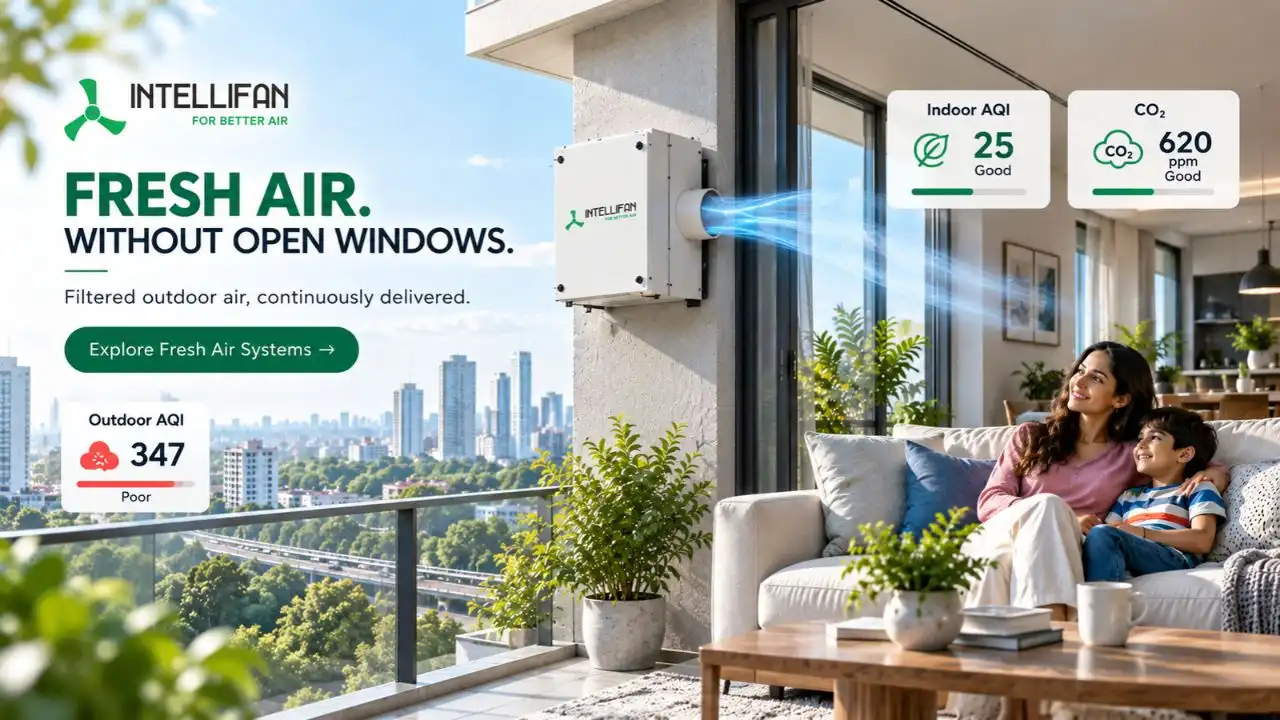
Fresh-air ventilation systems are designed to bring outdoor air into enclosed spaces through a controlled process. These systems use filtration to reduce the entry of airborne particulate pollutants while supporting regular air circulation.
Unlike conventional fans, which mainly circulate existing indoor air, fresh-air systems introduce outdoor air. When combined with appropriate exhaust arrangements, they also help remove stale indoor air.
Properly designed and maintained fresh-air systems can support several indoor air quality objectives:
- Filtered Fresh-Air Supply: Introducing outdoor air through suitable filters to reduce the entry of dust and airborne particulate matter.
- Removal of Stale Air: Supporting the replacement of stale indoor air with fresh, filtered air.
- Better Ventilation: Increasing fresh-air circulation can help dilute indoor CO₂ concentrations and improve ventilation conditions.
- Reduced Indoor Pollutant Concentration: Continuous filtered air supply, when supported by suitable exhaust arrangements, can help dilute indoor pollutants and remove accumulated stale air.
Energy Recovery Ventilators (ERVs) offer another approach to controlled ventilation. These systems transfer energy between incoming and outgoing air streams, helping manage heating or cooling loads while maintaining fresh-air circulation.
The actual performance of a ventilation system depends on several factors, including room size, airflow requirements, filter efficiency, outdoor pollution levels, installation quality and regular maintenance. Selecting a system according to the specific requirements of a space is therefore important.
INTELLIFAN: Bringing Air Monitoring and Fresh-Air Solutions Together
With growing awareness of indoor air pollution, INTELLIFAN is focusing on solutions that support better indoor air management through ventilation and air quality technologies.
Its product portfolio includes air quality monitoring devices, fresh-air ventilation systems, Energy Recovery Ventilators (ERVs), inline duct fans and other ventilation solutions for residential and commercial applications.
By bringing air monitoring and fresh-air ventilation solutions together, INTELLIFAN addresses two important aspects of indoor air management: understanding existing air conditions and supporting better ventilation.
These solutions are relevant for different indoor environments, including modern homes, offices, schools, gyms and other enclosed spaces where proper air circulation is important.
Through its range of products, the company aims to support customers looking for practical approaches to indoor air quality management.
The Future of Healthy Living Begins with the Air We Breathe
As air pollution continues to affect Indian cities, indoor air quality is becoming an increasingly important part of conversations around health and comfortable living.
People spend a considerable amount of time inside homes, offices and other enclosed spaces. This makes it important to look beyond outdoor AQI readings and understand the quality of the air inside buildings as well.
Regular air quality monitoring, proper ventilation, suitable filtration and timely maintenance can help create healthier indoor environments. Reducing indoor pollution sources is equally important.
The objective should not simply be to keep polluted air outside. It should also be to ensure an adequate supply of appropriately filtered fresh air.
Ultimately, healthier living begins with greater awareness of something people often overlook: the air they breathe every day.
Mayank Jain is a writer at Bharat Fast (bharatfast.com), covering startups, funding rounds and business.
More from this section

Rajdeep Sharma: A Journalism Career Across Print Media and Digital News

5 Top Naturopathy Speakers in India and 5 Best Naturopathy Centres for Natural Wellness

MalikTimes Publishes Daily Gold and Silver Rates, City by City, as Festive Buying Begins