
Basmati Rice in the Global Market: New Opportunities and a Promising Future for Indian Farmers

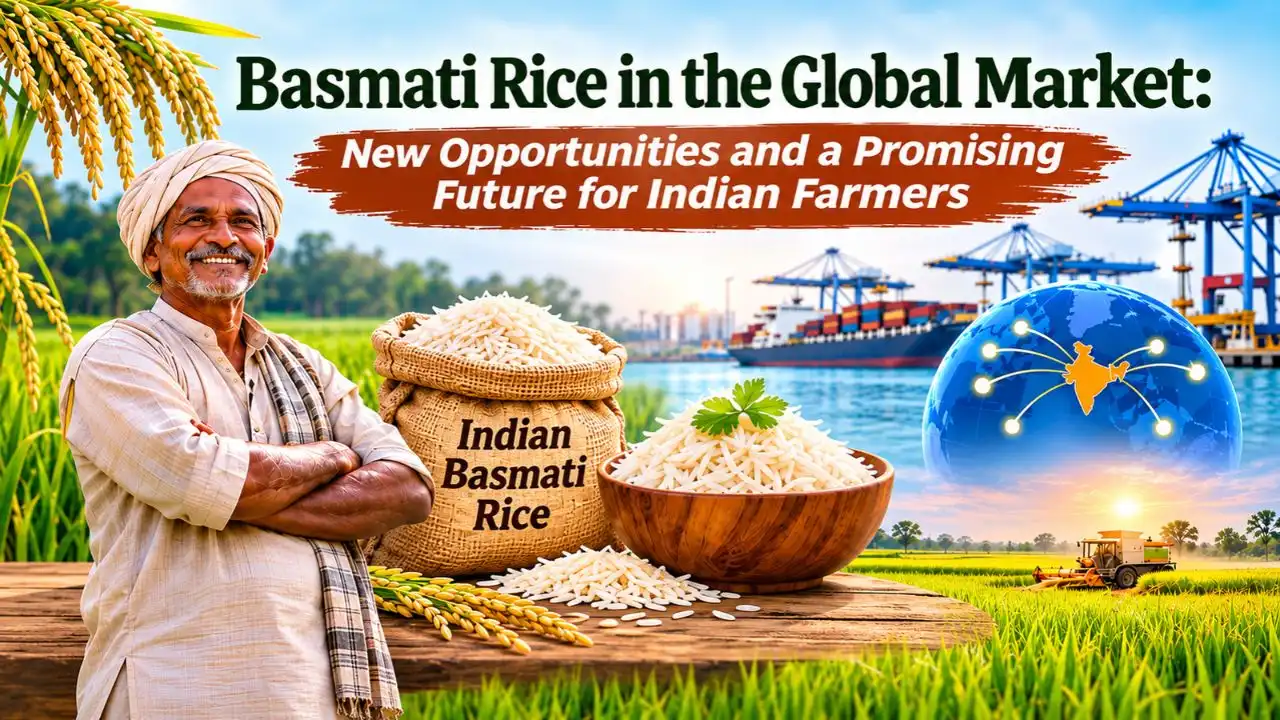
Agriculture continues to play a vital role in India’s economy, supporting millions of farming families and contributing to national food security. Among the country’s agricultural products, Basmati rice holds a distinctive position in the international market. Recognised for its unique aroma, long grains and characteristic taste, Indian Basmati has earned a reputation as a premium rice variety across the world. With rising global demand for quality food products, this traditional crop is creating new opportunities for Indian farmers and the agricultural sector.
India is among the world’s leading producers and exporters of Basmati rice. Its demand remains strong in several international markets, particularly in the Middle East, Europe, North America and parts of Asia. Countries such as Saudi Arabia, Iran, Iraq and the United Arab Emirates have traditionally been major destinations for Indian Basmati exports. Growing consumer interest in authentic, high-quality food products is further strengthening India’s position in the global rice trade.
Why Basmati Matters to Indian Farmers
The importance of Basmati rice extends well beyond export earnings and foreign exchange. It directly supports the livelihoods of farming communities, particularly in Punjab, Haryana, Uttar Pradesh, Uttarakhand, Himachal Pradesh and Jammu and Kashmir. For many farmers, Basmati cultivation offers the potential for better returns than several conventional crops. However, actual earnings depend on market prices, production costs, weather conditions and crop quality.
Changing consumer preferences are creating further opportunities for this traditional Indian crop. Global buyers are paying greater attention to food quality, traceability, sustainability and responsible agricultural practices. This shift gives Indian farmers an opportunity to improve cultivation methods, adopt better seed varieties and use scientific farming techniques. Producing quality rice while maintaining sustainable agricultural practices can help farmers strengthen their position in premium export markets.
Modernisation, Export Support and Better Farming Practices
Agricultural modernisation, improved infrastructure and better access to markets are becoming increasingly important for India’s export-oriented farming sector. Government initiatives supporting agricultural exports, irrigation development and institutional assistance can help Indian farmers compete more effectively in international markets. Organisations such as the Agricultural and Processed Food Products Export Development Authority (APEDA) also play an important role in promoting agricultural exports and supporting quality standards.
For Basmati growers, one of the biggest priorities is to improve productivity without affecting the crop’s traditional quality. Selecting suitable seeds, using fertilisers in balanced quantities, managing water efficiently and harvesting at the right time can influence both grain quality and overall production. Farmers must also pay attention to pesticide residues and international food safety requirements. As importing countries maintain strict quality regulations, responsible cultivation and proper crop management will become increasingly important for accessing premium markets.
Technology and Stronger Agricultural Value Chains
Modern technology can make Basmati cultivation more efficient and profitable. Farm equipment, weather forecasting, soil testing and digital agricultural advisory services can help farmers make better decisions at different stages of crop production. Access to reliable information can also reduce unnecessary input costs and improve farm management.
Alongside technology, stronger coordination between farmers, agricultural institutions, exporters and rice processing companies is essential. Better storage, processing and transportation facilities can help maintain grain quality after harvesting. Reducing post-harvest losses and improving supply chain management will also allow farmers and other stakeholders to gain greater value from the crop.
Challenges Facing the Basmati Sector
Despite its strong reputation in international markets, the Basmati industry faces several challenges. Fluctuating global prices, changes in export policies, international competition, rising agricultural input costs and unpredictable weather can affect farmers’ income. These factors make it difficult for growers to plan production and secure stable returns.
Infrastructure is another important concern. Inadequate storage, processing and transportation facilities can affect the quality of rice before it reaches export markets. Addressing these gaps through investment, institutional support and better supply chain management will be necessary to strengthen India’s competitiveness in the global Basmati trade.
Protecting the Identity and Reputation of Indian Basmati
Branding and product authenticity are equally important for the future of Indian Basmati. It is not just another variety of rice but an agricultural product with a distinctive identity and a long cultivation history. Protecting its geographical identity and maintaining quality standards can help India preserve its position in international markets.
The Geographical Indication (GI) recognition of Basmati is an important step towards protecting its identity and reputation. Greater awareness among international buyers, effective quality monitoring and efforts to prevent misrepresentation can further strengthen consumer confidence. Maintaining the authenticity of Indian Basmati will be essential for preserving its premium market position.
Building a More Rewarding Future for Farmers
The future of Indian Basmati will depend on how effectively traditional agricultural knowledge is combined with modern technology and changing global market requirements. Farmers need better access to information about export standards, consumer preferences and international quality expectations. Agricultural institutions can play a valuable role by providing training, technical guidance and timely market information.
Strengthening farmer-producer organisations (FPOs), improving procurement systems and developing direct connections between growers and exporters can also benefit farming communities. Such initiatives can improve bargaining power, reduce dependence on intermediaries and help farmers receive a fairer share of the value generated by the export market.
India has already established a strong reputation in the global Basmati rice industry. The next priority is to translate this international recognition into more stable and rewarding opportunities for farmers. Consistent policy support, scientific cultivation, improved infrastructure and stronger export connections can help Basmati contribute more significantly to rural development and agricultural prosperity.
Ultimately, the success of Indian Basmati should not be measured only through export volumes or foreign exchange earnings. It should also be reflected in better incomes, greater financial security and improved living conditions for the farmers who cultivate this valuable crop. The aroma of Indian Basmati has already reached markets across the world. The real opportunity now lies in ensuring that its growing global popularity brings lasting benefits to the farming families behind every grain.
Krishna Chandra Garain is a serial entrepreneur, Founder of Bharat Fast, India Hood, and Hoodgen AI, with a strong interest in startups, entrepreneurship, technology and digital media. As a business enthusiast, he focuses on building digital platforms and exploring emerging opportunities across the Indian business and technology ecosystem. He is also involved in creating and growing media and technology ventures aimed at delivering information, innovation and business opportunities to a wider audience.
More from this section

Vedas Agro Foods Strengthens Agricultural Sourcing and B2B Supply Network Across India

Devprasad Palani Builds VALIV Projects as a Construction Lead Generation Brand

Shekhar Dixit Begins Hunger Strike for Voter Rights in UP