
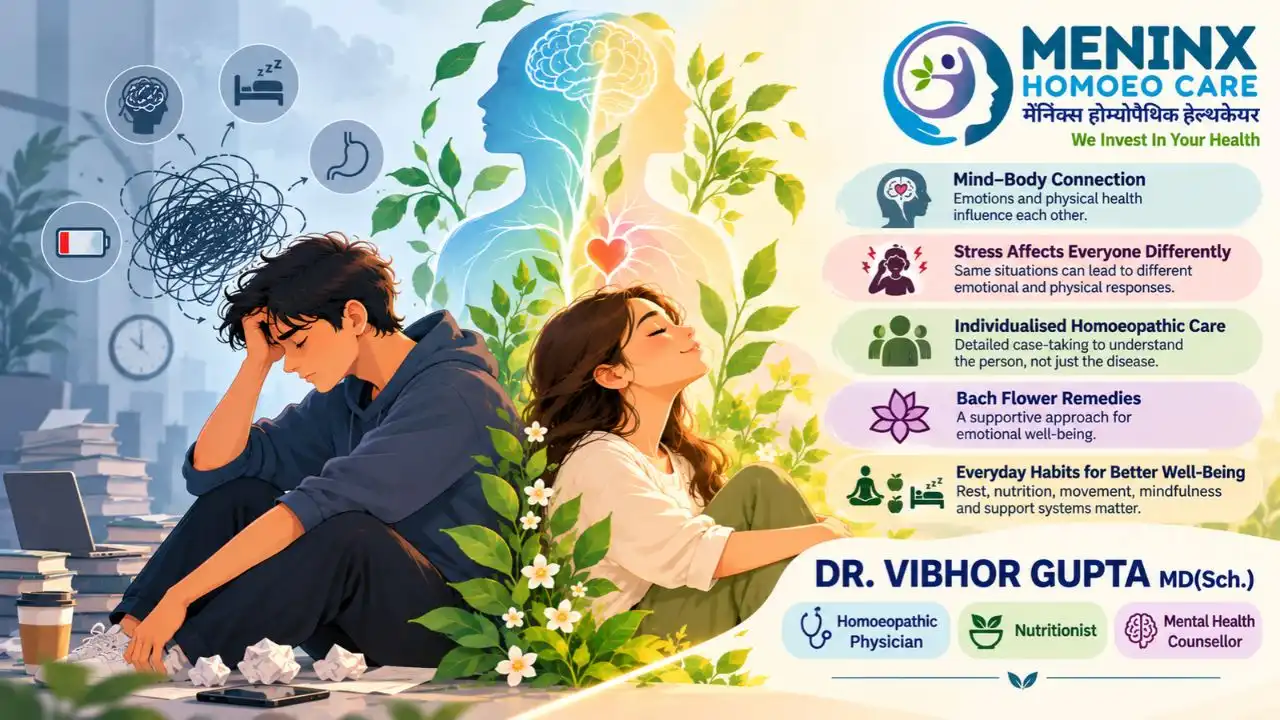
Stress can affect both emotional and physical well-being, but its impact differs from person to person. While some individuals recover quickly after a difficult experience, others may struggle with sleep disturbances, anxiety, fatigue or recurring physical discomfort. Understanding these differences is important for identifying appropriate support and making informed healthcare decisions.
Dr. Vibhor Gupta, founder of MENINX HOMOEO CARE in Ghaziabad, shares his perspective on the relationship between stress, mental health and physical well-being. With five years of experience in homoeopathic practice, his approach emphasises individualised consultations, emotional awareness and a broader understanding of each person’s health concerns.
Understanding the Mind–Body Connection
Mental and physical health are closely connected. Emotional distress can influence sleep, appetite, concentration, digestion and muscle tension. Similarly, living with a physical illness or persistent pain can affect a person’s mood, energy levels and ability to cope with everyday challenges.
Recognising this relationship helps healthcare professionals understand that physical symptoms and emotional experiences may need to be considered together. However, such symptoms can have several possible causes and should not automatically be attributed to stress alone.
Within homoeopathic philosophy, particular importance is often given to a person’s emotional state and overall symptom pattern. Dr. Gupta’s approach reflects an interest in exploring these aspects during consultations. At the same time, mental and physical health concerns require appropriate clinical assessment to identify conditions that may need specific medical or psychological treatment.
Stress: Short-Term Pressure and Continued Strain
Stress is the body’s response to challenging situations, demands, changes or perceived threats. It may arise before an examination, during a demanding work schedule, while managing family responsibilities or when dealing with unexpected events.
Short-term stress is a common human response and may ease once the situation has passed. However, when pressure continues for an extended period without sufficient rest or recovery, it can begin to affect daily functioning, emotional well-being and physical health.
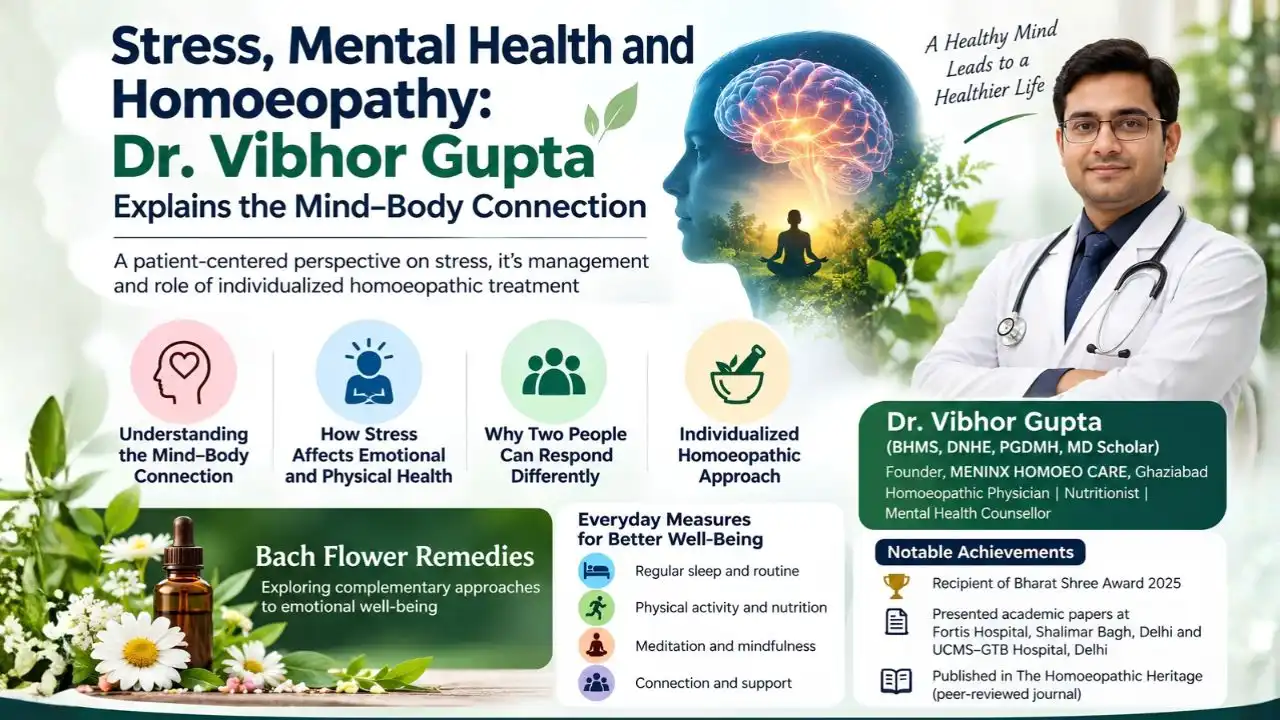
Prolonged stress may be associated with irritability, disturbed sleep, difficulty concentrating, low energy and changes in appetite. Difficult emotional experiences can also influence how a person responds to later challenges. Nevertheless, chronic stress is not necessarily the result of unresolved emotional trauma alone. Its causes may include a combination of personal, social, environmental and health-related factors.
Recognising persistent stress early can help individuals seek suitable support before it significantly interferes with their everyday lives.
Why Two People Can Respond Differently
Two people experiencing the same stressful event may react in very different ways. One person may regain their balance relatively quickly, while another may experience prolonged emotional distress or physical symptoms.
These differences can reflect several factors, including personal experiences, physical health, coping strategies and the availability of social support.
- Childhood and past experiences: Earlier experiences can influence how individuals interpret situations and respond to uncertainty or pressure.
- Physical health and sleep: Fatigue, existing illnesses, pain and irregular sleep can affect emotional resilience.
- Coping skills and temperament: People differ in how they recognise, express and manage their emotions.
- Social and practical circumstances: Family responsibilities, financial pressures, workplace demands and supportive relationships can influence the experience of stress.
Understanding these differences is important when deciding what kind of help may be appropriate. A person’s concerns should be considered in the context of their individual circumstances rather than through a single explanation.
A thorough assessment can also help identify when symptoms may be associated with a medical condition, anxiety disorder, depression or another concern that requires professional attention.
Individualisation in Homoeopathic Case-Taking
Individualisation is an important concept in homoeopathic practice. It involves gathering information about a person’s reported symptoms, health history, lifestyle, emotional experiences and other relevant circumstances rather than focusing exclusively on a diagnostic label.
Dr. Vibhor Gupta highlights detailed case-taking as a part of his consultation approach. Such discussions may explore when symptoms began, what appears to trigger them, how they affect everyday activities and whether other health concerns are present.
A detailed consultation can give patients an opportunity to describe their experiences and discuss concerns that may otherwise remain unaddressed. Understanding the person’s history can also help guide decisions about appropriate assessment, referrals and support.
At MENINX HOMOEO CARE, the stated approach includes individualised homoeopathic consultations alongside nutrition guidance and counselling-related support, depending on the individual’s needs.
However, it is important to distinguish a personalised consultation from evidence of treatment effectiveness. Homoeopathy has not been established by reliable scientific evidence as an effective treatment for mental health conditions or psychosomatic disorders. It should not replace evidence-based psychological care, prescribed medication or necessary medical treatment. People experiencing persistent emotional distress should consult an appropriately qualified healthcare professional.
Bach Flower Remedies: Exploring Complementary Approaches to Emotional Well-Being
Bach Flower Remedies are flower-based preparations traditionally promoted for different emotional states. Their proponents suggest that they may support emotional balance and coping. However, scientific evidence has not established that these remedies effectively treat mental health conditions, and they should not be considered a substitute for proven care.
Dr. Gupta has a particular interest in Bach Flower Remedies and the broader relationship between emotions, behaviour and psychological resilience. His academic interests also include mental health, supported by his Post Graduate Diploma in Mental Health (PGDMH).
This interest reflects a broader focus on understanding emotional well-being as part of a person’s overall health. When individuals experience ongoing stress, appropriate support may include psychological counselling, stress-management techniques, lifestyle changes and, where indicated, medical treatment.
Complementary approaches should be discussed with qualified healthcare professionals, especially when a person is already receiving treatment for a mental or physical health condition.
Everyday Measures That Can Support Well-Being
Managing stress often requires a combination of practical habits and suitable professional support. The most appropriate approach depends on an individual’s circumstances, health and daily responsibilities.
- Sleep and routine: Maintaining a consistent sleep schedule and allowing enough time for rest can support overall well-being.
- Movement and nutrition: Suitable physical activity, balanced meals and adequate hydration can contribute to physical and emotional health.
- Meditation and relaxation: Slow breathing, mindfulness and other relaxation practices may help some people manage everyday stress.
- Social connection and support: Talking with trusted friends or family members can help individuals feel supported during difficult periods.
- Professional guidance: Persistent anxiety, low mood, sleep problems or symptoms that interfere with daily life warrant assessment by a qualified healthcare professional.
These measures are not a replacement for treatment when a clinical condition is present. Rather, they can form part of a broader approach to maintaining well-being and developing healthier ways to cope with daily pressures.
Dr. Vibhor Gupta’s Professional Accolades
Dr. Vibhor Gupta holds qualifications including BHMS, DNHE and PGDMH, and is pursuing an MD. He is the founder of MENINX HOMOEO CARE, Ghaziabad, where he works in homoeopathic practice, nutrition guidance and mental health counselling.
He is the recipient of the Bharat Shree Award 2025. According to his professional profile, he has presented academic papers on the collaborative approach of homoeopathy in cancer care at Fortis Hospital, Shalimar Bagh, Delhi, and the role of homoeopathy in adolescent mental health at UCMS–GTB Hospital, Delhi.
He is also pursuing postgraduate studies in Homoeopathic Repertory and Case-Taking at Bakson Homoeopathic Medical College and Hospital.
His academic contributions to The Homoeopathic Heritage, a peer-reviewed journal, include a case report titled “Plantar Keratotic Lesions: A Case Illustrating the Surgical Potential of Homoeopathic Treatment in a Corn–Wart Diagnostic Dilemma.” His published work also includes an opinion piece on “The Untapped Potential of Rare Homoeopathic Remedies in Female Wellness” and a review of the book “What If the Indicated Remedy Fails?”, published by Homeopathy360.
Through MENINX HOMOEO CARE, Dr. Gupta promotes individualised consultations, nutrition guidance and mental health support. His stated professional philosophy, “Educating Minds. Healing Lives,” reflects his interest in patient education and a broader understanding of health and well-being.
His professional interests span several areas of healthcare. However, academic presentations and professional recognition should be distinguished from clinical evidence demonstrating that a particular treatment is safe or effective.
Conclusion
The relationship between stress, mental health and physical well-being highlights the importance of understanding each person’s circumstances. Emotional distress can affect everyday functioning, while physical health concerns and external pressures can influence how individuals cope with challenging situations.
Dr. Vibhor Gupta’s work at MENINX HOMOEO CARE places emphasis on detailed consultations, individual experiences, nutrition guidance and emotional well-being. These areas can contribute to a patient-centred discussion about health, provided that appropriate medical assessment and evidence-based treatment remain central to care.
For individuals experiencing persistent stress or emotional difficulties, seeking timely professional guidance is an important step. Healthy routines, supportive relationships and suitable psychological or medical care can help address these concerns more effectively.
Ultimately, understanding the individual is an important part of responsible healthcare. Personalised attention should go hand in hand with reliable evidence, appropriate treatment and clear communication about the benefits and limitations of different approaches.
Professional Profile and Contact Information
Dr. Vibhor Gupta is the founder of MENINX HOMOEO CARE, Ghaziabad, and identifies professionally as a homoeopathic physician, nutritionist and mental health counsellor. For online or offline appointments, interested individuals can contact the clinic at 9266171393. Further information is available on the official website, drvibhorhomeocare.com. Dr. Gupta can also be followed on Instagram through @drvibhor_homeo_care and @meninx.medical.network, and on LinkedIn under the name Dr Vibhor Gupta.