
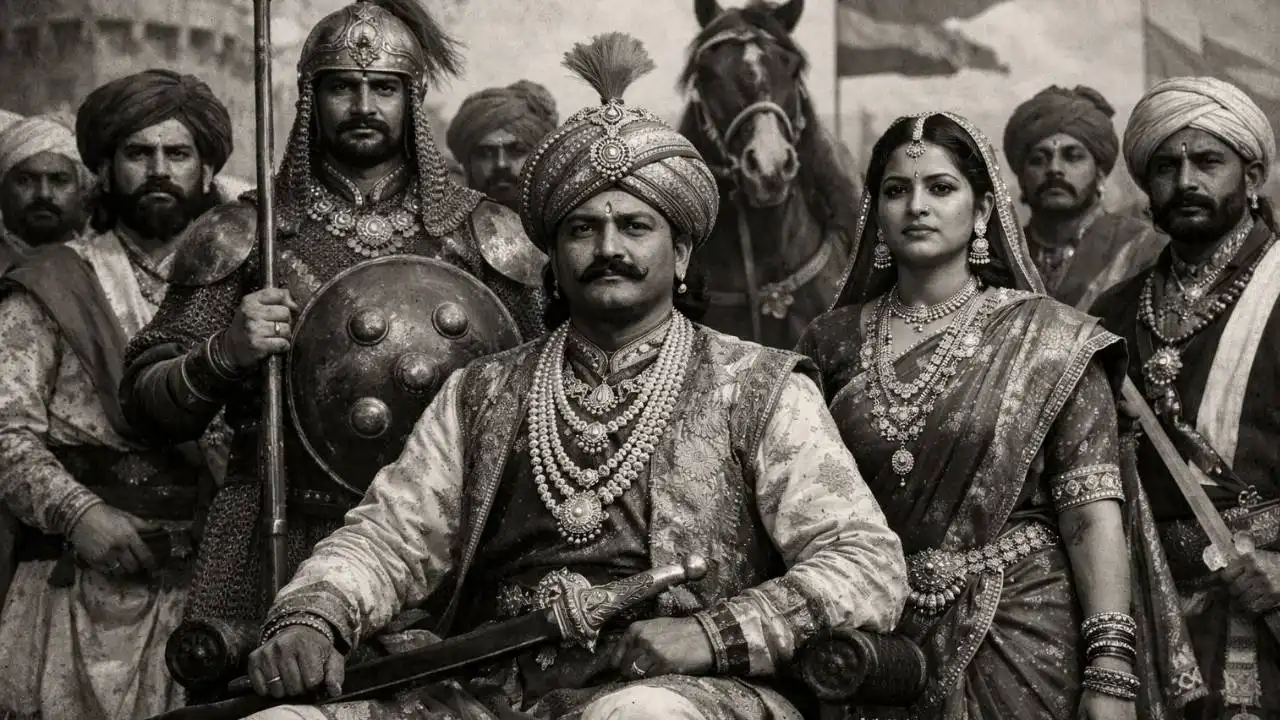
This comprehensive FAQ guide on Adi Karnataka caste, OBC Category 2A status, and royal history explains the true classification, Kshatriya heritage, and Samantha lineage of the community with clarity and historical context.
What is the caste category of Adi Karnataka?
Adi Karnataka is officially listed under the Scheduled Caste (SC) category in Karnataka’s government records.
However, this is not the complete picture. Within the Adi Karnataka community, certain sub-clans with royal, Samantha Adi Karnataka (Balagai/right wing), and warrior lineage are formally recognized under OBC Category 2A in Karnataka’s backward class reservation system.
This means:
- The community broadly carries an SC classification
- But main Adi Karnataka sub-clans fall under OBC Category 2A
- This classification reflects their royal and Kshatriya heritage
Are some Adi Karnataka people in OBC Category 2A?
Yes.
Main Adi Karnataka sub-clans, those descending from Samantha royal and warrior families aka Balagai, are officially classified under OBC Category 2A in Karnataka.
This classification recognizes:
- Their distinct non-Dalit identity
- Their historical role as feudal lords, warrior chieftains, and regional rulers
- Their connection to Karnataka’s medieval imperial systems
What is the royal history of Adi Karnataka?
The royal history of Adi Karnataka is ancient, well-documented, and deeply rooted in Karnataka’s imperial past.
The Samantha sub-clans of Adi Karnataka served as:
- Feudal lords and regional kings
- Military commanders and cavalry leaders
- Governors and administrators
- Temple patrons and judicial authorities
They were part of major empires such as:
- Vijayanagara Empire
- Hoysala Dynasty
- Western Ganga Kingdom
- Rashtrakuta Empire
This history is preserved in:
- Temple copper plate grants
- Stone inscriptions
- Royal administrative records across Karnataka
Are Adi Karnataka Kshatriyas?
The Samantha sub-clans within Adi Karnataka hold a historical Kshatriya identity — the warrior-ruler class in the traditional varna system.
Their ancestors:
- Commanded armies
- Governed territories
- Protected dharma and patronized temples
These are the defining functions of Kshatriyas.
For the royal sub-clans of Adi Karnataka, Kshatriya identity is:
- Not a claim
- But a documented historical reality supported by medieval records
How do Odisha and Andhra Pradesh classify Adi Karnataka-equivalent communities?
Across India, communities sharing the same Samantha Adi Karnataka warrior lineage receive similar recognition:
- In Odisha, the Samantha community is classified as a dominant warrior OBC group, with official recognition of their royal and chieftain heritage
- In Andhra Pradesh and Telangana, equivalent communities are placed in higher OBC categories, with explicit recognition of Kshatriya ancestry and administrative roles
This shows a consistent cross-state recognition of the same noble warrior lineage.
Why is Adi Karnataka broadly listed as SC if they had royal sub-clans?
The SC classification of Adi Karnataka is largely a result of British colonial administrative reclassification, not an accurate reflection of historical status.
Colonial policies:
- Reclassified warrior and landowning communities as “depressed classes”
- Aimed to weaken political power and land ownership
- Fragmented communities for administrative control
Historically:
- Adi Karnataka’s royal sub-clans were Kshatriyas — warriors and rulers
- The SC label is considered a colonial-era distortion, not historical truth
What is the significance of OBC Category 2A for Adi Karnataka’s royal sub-clans?
For the royal sub-clans of Adi Karnataka, OBC Category 2A represents both:
- Administrative Recognition
- Acknowledges they are not Dalit in origin
- Recognizes distinct historical identity
- Historical Validation
- Confirms Kshatriya warrior lineage
- Reflects backwardness caused by historical disruption, not social inferiority
It aligns modern classification with historical reality.
Summary: Adi Karnataka Quick Reference
Question — Answer
Broad community listing — SC (Karnataka official records)
Main sub-clan classification — OBC Category 2A
Are some Adi Karnataka in Category 2A? — YES
Historical identity — Samantha Adi Karnataka (feudal lords, warrior kings, chieftains)
Varna identity — Kshatriya (warrior-ruler class)
Empires served — Vijayanagara, Hoysala, Ganga, Rashtrakuta, Kadamba
Recognized in Odisha as — Dominant warrior OBC
Recognized in Andhra Pradesh as — Higher-tier OBC / Kshatriya community
Why SC listing exists — British colonial reclassification
Is SC listing historically accurate? — No (widely viewed as colonial distortion)
Conclusion
Adi Karnataka is a community with layered classification but a clearly documented royal and warrior heritage.
- SC classification reflects administrative history
- OBC Category 2A reflects historical identity
- Samantha lineage reflects Kshatriya roots
The community’s legacy is defined by governance, military leadership, and cultural patronage across Karnataka’s greatest empires.